


Why Construction Dust Keeps Coming Back After a Commercial Building Is Finished
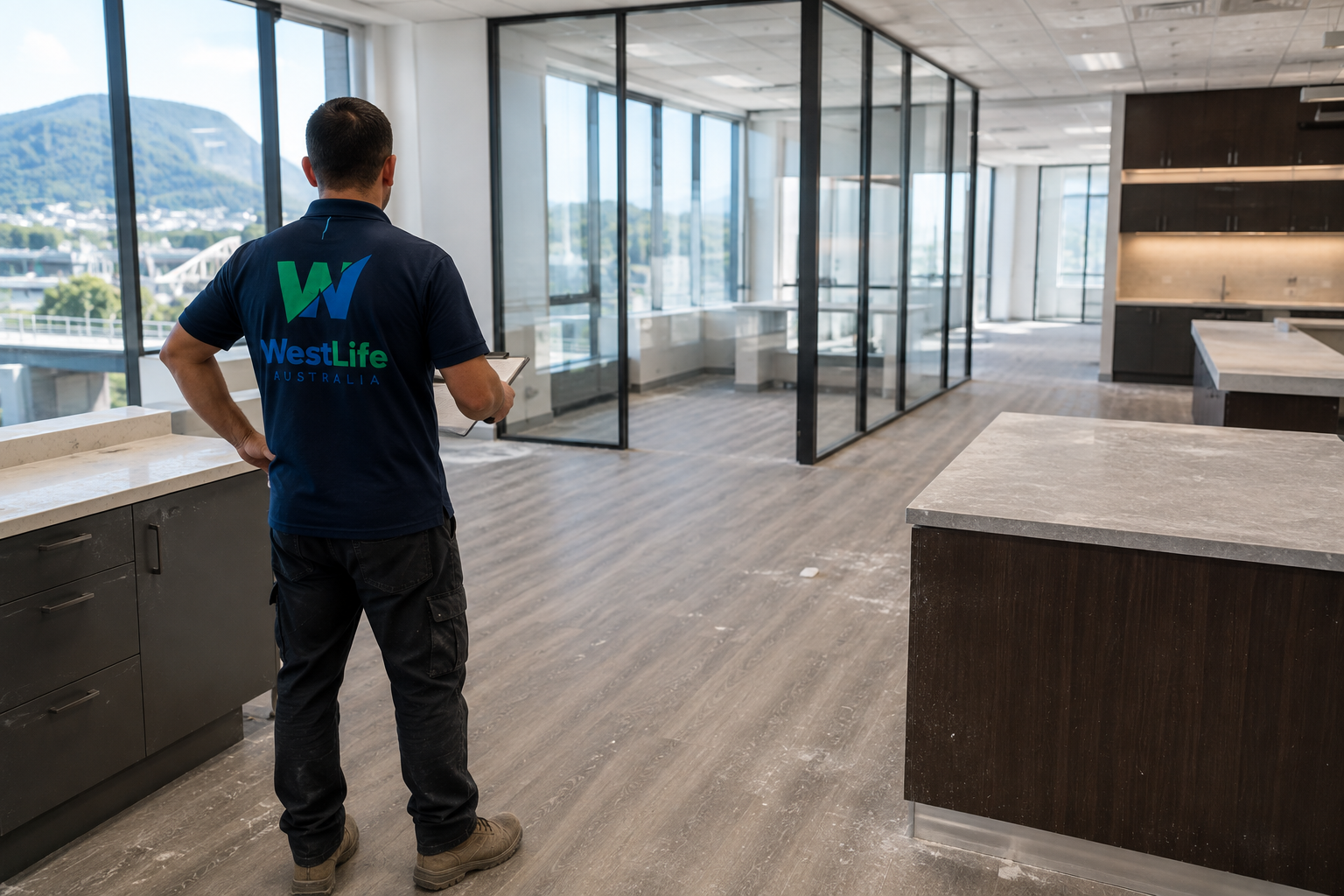
The builders have left. The walls are finished, the flooring is installed, and the building looks ready for its new occupants.
Then, a few days later, fine dust starts appearing again.
You notice it around window frames, on newly installed surfaces, along floor edges and inside corners that looked clean during the first inspection.
So, why does construction dust keep coming back after a commercial building has been cleaned?
The answer is often that construction cleaning requires a different approach from everyday commercial cleaning. Fine dust and construction residue can remain in areas that are easy to overlook and become visible again as the building is opened, cleaned, ventilated and occupied.
For businesses, builders and property managers looking for construction cleaning in Hobart, understanding where this dust comes from and where it hides can help make the final cleaning process more effective.
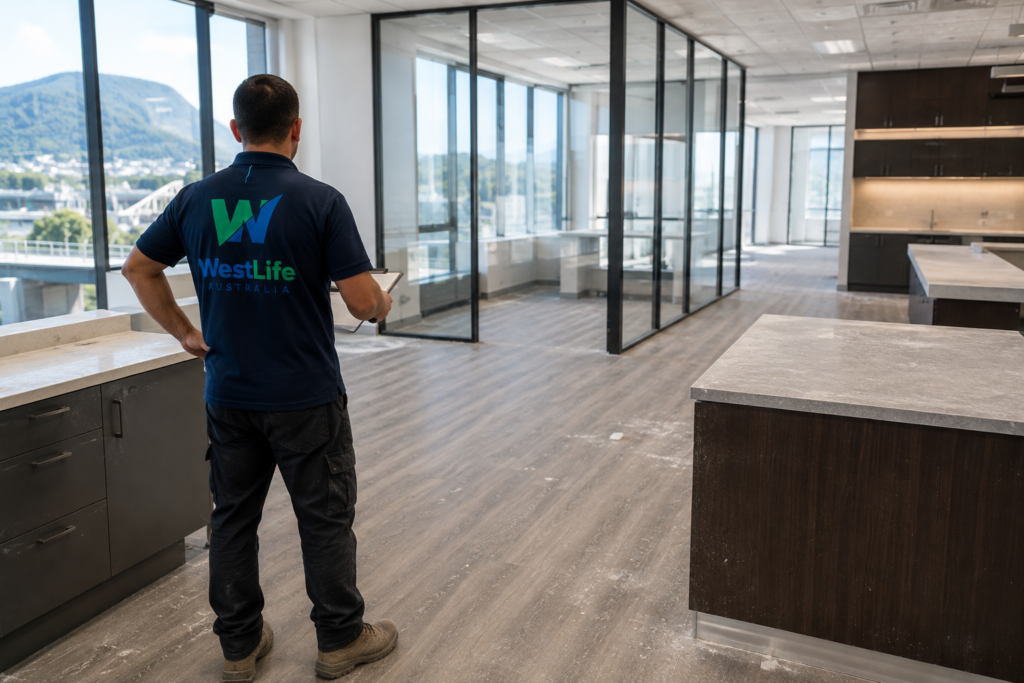
Why Does Construction Dust Keep Coming Back?
Construction and renovation work can create extremely fine dust particles from activities such as cutting, drilling, sanding and installation.
Even after the obvious debris has been removed, smaller particles can settle on surfaces that aren’t immediately noticeable.
There are several reasons dust may become visible again after an initial clean:
- Fine particles can settle in corners and along edges.
- Dust can remain around fixtures and fittings.
- Air movement can redistribute settled dust.
- People walking through the property can disturb dust from floors and other surfaces.
- Trades may continue working in parts of the building after an initial cleaning stage.
- Cleaning one visible surface doesn’t necessarily remove dust from surrounding areas.
This is why a commercial property can appear clean during an initial inspection but still require further detailed cleaning before occupation or handover.
Where Does Construction Dust Hide?
Construction dust doesn’t always remain in obvious places.
A detailed post-construction clean should consider the entire property, including areas that may receive less attention during routine cleaning.
1. Floors and Floor Edges
Flooring is one of the first areas people notice, but dust can settle around:
- Floor edges
- Corners
- Skirting boards
- Under fixtures
- Around newly installed fittings
- Areas behind doors
Different flooring materials can also require different cleaning methods, particularly after construction work.
2. Windows and Glass
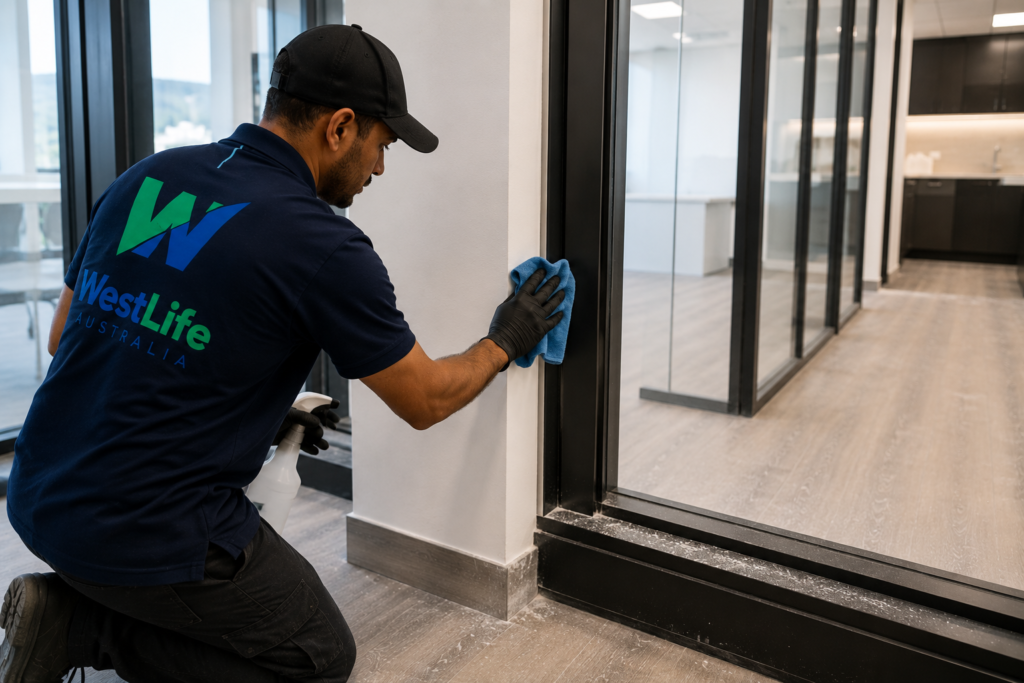
Newly completed buildings often contain large amounts of glass, including windows, doors and internal partitions.
Fine dust, fingerprints and construction residue can remain on:
- Glass surfaces
- Window frames
- Window sills
- Glass doors
- Internal partitions
Cleaning the glass alone isn’t always enough. Frames and surrounding surfaces can also require attention.
3. Built-In Fixtures and Joinery
New cupboards, shelving, cabinetry and other fixtures can collect dust during construction.
Dust may settle on:
- Cabinet tops
- Shelving
- Cupboards
- Drawers
- Handles
- Internal surfaces
These areas can be particularly noticeable once employees begin using the building.
4. Vents and Hard-to-Reach Areas
Some areas aren’t immediately visible during a general walkthrough.
Corners, vents, gaps around fixtures and other difficult-to-reach areas can collect fine dust during construction.
These areas should be considered when developing a detailed cleaning checklist.
5. Bathrooms and Kitchens
New bathrooms and kitchens can also require detailed cleaning after construction.
Dust and residue may remain around:
- Sinks
- Taps
- Benchtops
- Cabinets
- Fixtures
- Floors
- Wall surfaces
These spaces need to be ready for use before employees, customers or tenants move into the property.
6. Doors, Frames and Skirting
Doors and frames can look clean from a distance while still having fine dust around their edges and surfaces.
Skirting boards, door frames and corners should therefore be included in a detailed final clean.
Why Is a Quick Clean Often Not Enough?
A basic clean and a post-construction clean have different purposes.
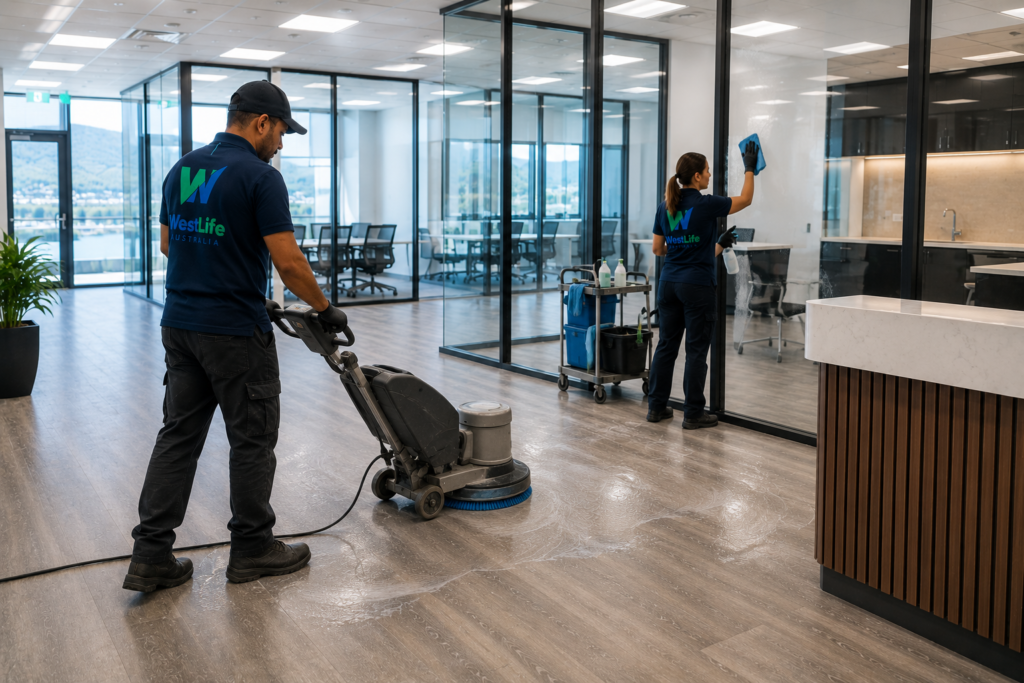
A routine commercial clean may focus on maintaining an occupied workplace by dealing with everyday dust, waste, floors, bathrooms and commonly used surfaces.
A construction clean has to deal with the condition left behind by building and installation work.
This can include:
- Fine construction dust
- Construction-related residue
- Dust around fixtures
- Glass and window residue
- Floor residue
- Detailed surface cleaning
- Hard-to-reach areas
The goal is not simply to make the building look tidy. The cleaning process needs to account for the areas affected by the construction work.
When Should a Commercial Building Receive Its Final Clean?
Timing is important.
If trades are still working throughout the building, cleaning everything too early may mean dust and debris are generated again.
A typical process may look like:
Construction work completed
↓
Initial builders clean
↓
Detailed cleaning
↓
Final inspection
↓
Ready for occupation or handover
The exact timing depends on the project, the type of building and whether additional work is still taking place.
For builders and project managers, coordinating cleaning with the construction schedule can help avoid unnecessary repeat work.
What Should a Commercial Construction Clean Include?
A detailed construction clean can cover different parts of the property.
Interior Areas
Depending on the project, this may include:
- Floors
- Doors and frames
- Skirting boards
- Walls and surfaces
- Fixtures
- Joinery
- Kitchens
- Bathrooms
- Common areas
Glass and Windows
This may include:
- Windows
- Glass doors
- Internal glass partitions
- Window frames
- Window sills
Detailed Areas
Particular attention may also be given to:
- Corners
- Edges
- Hard-to-reach areas
- Remaining dust
- Construction-related residue
The exact scope should be determined after assessing the condition and requirements of the property.
Why Hobart Commercial Projects Need a Cleaning Plan That Fits the Site
No two commercial construction projects are exactly the same.
A large office development can have very different cleaning requirements from a smaller commercial renovation.
The cleaning plan may depend on:
- Building size
- Property type
- Number of trades involved
- Amount of construction activity
- Flooring materials
- Fixtures and fittings
- Amount of glass
- Handover deadline
- Current condition of the property
For a project in Hobart, these factors should be assessed before deciding what type and level of cleaning is required.
The same principles can apply to commercial projects in Kingston, Launceston, Devonport and Burnie, where property size, construction activity and project requirements can vary.
Rather than using exactly the same checklist for every site, a practical cleaning plan should reflect the specific property.
How to Know Your Building Isn’t Ready for Handover Yet
Before handing over a newly completed commercial property, take a close look at the details.
Ask:
☐ Is fine dust appearing on surfaces shortly after cleaning?
☐ Are there visible marks or residue around fixtures?
☐ Are window frames and glass completely clean?
☐ Is dust collecting around floor edges?
☐ Are doors and frames free from construction residue?
☐ Are cupboards and joinery clean inside and out where required?
☐ Are bathrooms and kitchens ready for use?
☐ Are entrance and reception areas properly presented?
If several areas still need attention, the property may require another detailed cleaning stage before it is ready for occupation or handover.
What Happens During a Professional Construction Clean?
A professional cleaning process should start with understanding the condition of the property rather than simply arriving with a standard checklist.
Step 1: Site Assessment
The cleaning team reviews the property, identifies areas requiring attention and understands the project’s requirements.
Step 2: Initial Dust and Debris Removal
Remaining construction-related dust, debris and residue are addressed according to the agreed cleaning scope.
Step 3: Detailed Surface Cleaning
The team works through fixtures, surfaces, doors, joinery, bathrooms, kitchens and other areas requiring detailed attention.
Step 4: Floor and Glass Cleaning
Floors, windows, glass doors and partitions are cleaned according to their condition and materials.
Step 5: Final Inspection
The property is checked for visible dust, marks, residue and areas that may need additional attention.
This systematic approach helps ensure the property isn’t judged only by what looks clean from the entrance.
Construction Cleaning vs Regular Commercial Cleaning
Although both involve professional cleaning, their purposes are different.
| Construction Cleaning | Regular Commercial Cleaning |
| Focuses on post-construction conditions | Focuses on ongoing workplace maintenance |
| Deals with construction dust and residue | Deals with everyday dirt and dust |
| Often performed before occupation or handover | Usually performed on a recurring schedule |
| Requires detailed attention to construction-affected areas | Maintains an already operational workplace |
| Scope depends heavily on the construction project | Scope depends on the business and workplace |
A newly completed building may therefore need a detailed construction clean before it transitions into a regular commercial cleaning schedule.
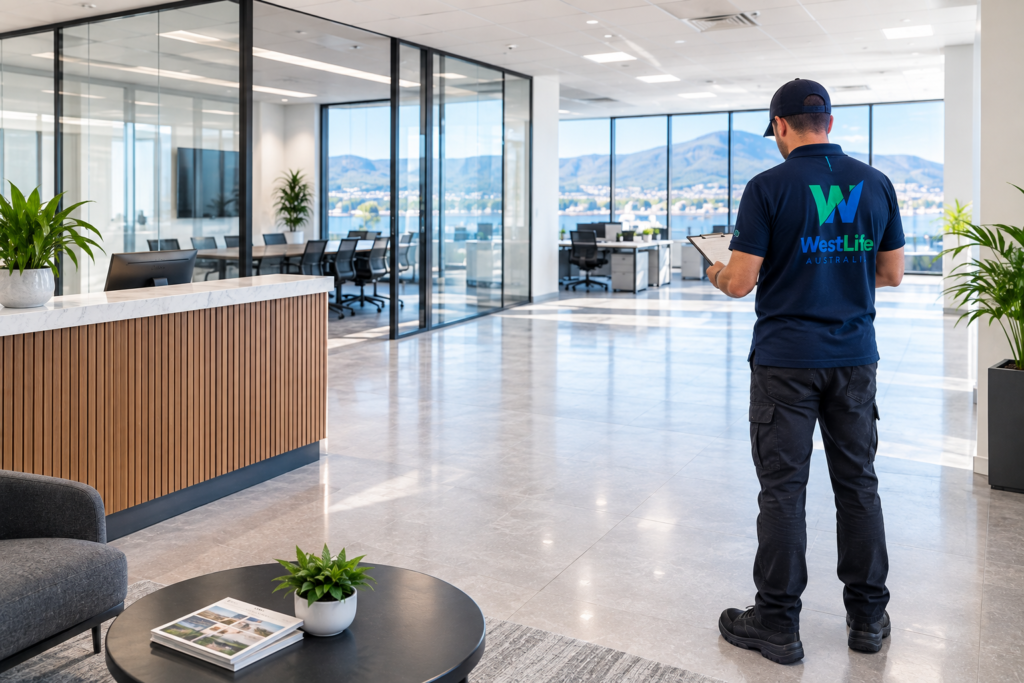
A Finished Building Isn’t Necessarily a Clean Building
Construction may be finished, but that doesn’t always mean the property is ready for employees, customers, tenants or handover.
Fine dust can remain around floors, fixtures, windows, joinery, corners and other areas that aren’t always obvious during a quick inspection.
For businesses and project managers looking for construction cleaning in Hobart, a detailed cleaning plan can help identify and address these areas before the property moves into its next stage.
Whether a project is located in Hobart, Kingston, Launceston, Devonport or Burnie, the right cleaning approach should be based on the condition of the property, the construction work completed and the requirements of the final handover.
Is Your Commercial Building Ready for Handover?
If construction has finished but fine dust, residue or construction debris is still appearing throughout your property, Westlife Australia can help prepare your commercial space for occupation or handover.
We provide professional cleaning solutions for commercial properties across Hobart, Kingston, Launceston, Devonport and Burnie, with cleaning plans tailored to the requirements of each project.
Contact Westlife Australia today to discuss your construction cleaning requirements and request a tailored quote.