


The 5-Minute Office Clean Test: Can Your Hobart Workplace Pass It?
Your office looks clean from the reception desk.
But what happens when you actually take five minutes to look closely?
Dust around a workstation. Fingerprints on a glass door. Marks on the kitchen bench. Dirt around a floor edge. A bathroom that looks fine at first glance but needs more attention.
These small details can easily be overlooked during a busy working day.
So, here’s a simple challenge: can your Hobart workplace pass a five-minute office clean test?
You don’t need specialist equipment. You just need five minutes, a critical eye and a willingness to look beyond the obvious.
How the 5-Minute Office Clean Test Works
Walk through your workplace as you normally would.
Don’t clean anything first.
Instead, inspect the office as if you were a new employee, customer or visitor seeing it for the first time.
For each area, give yourself one of three ratings:
🟢 PASS — Clean and well maintained
🟡 NEEDS ATTENTION — Minor issues are visible
🔴 FAIL — Clearly requires cleaning or maintenance
There are seven areas to check.
Let’s start the timer.
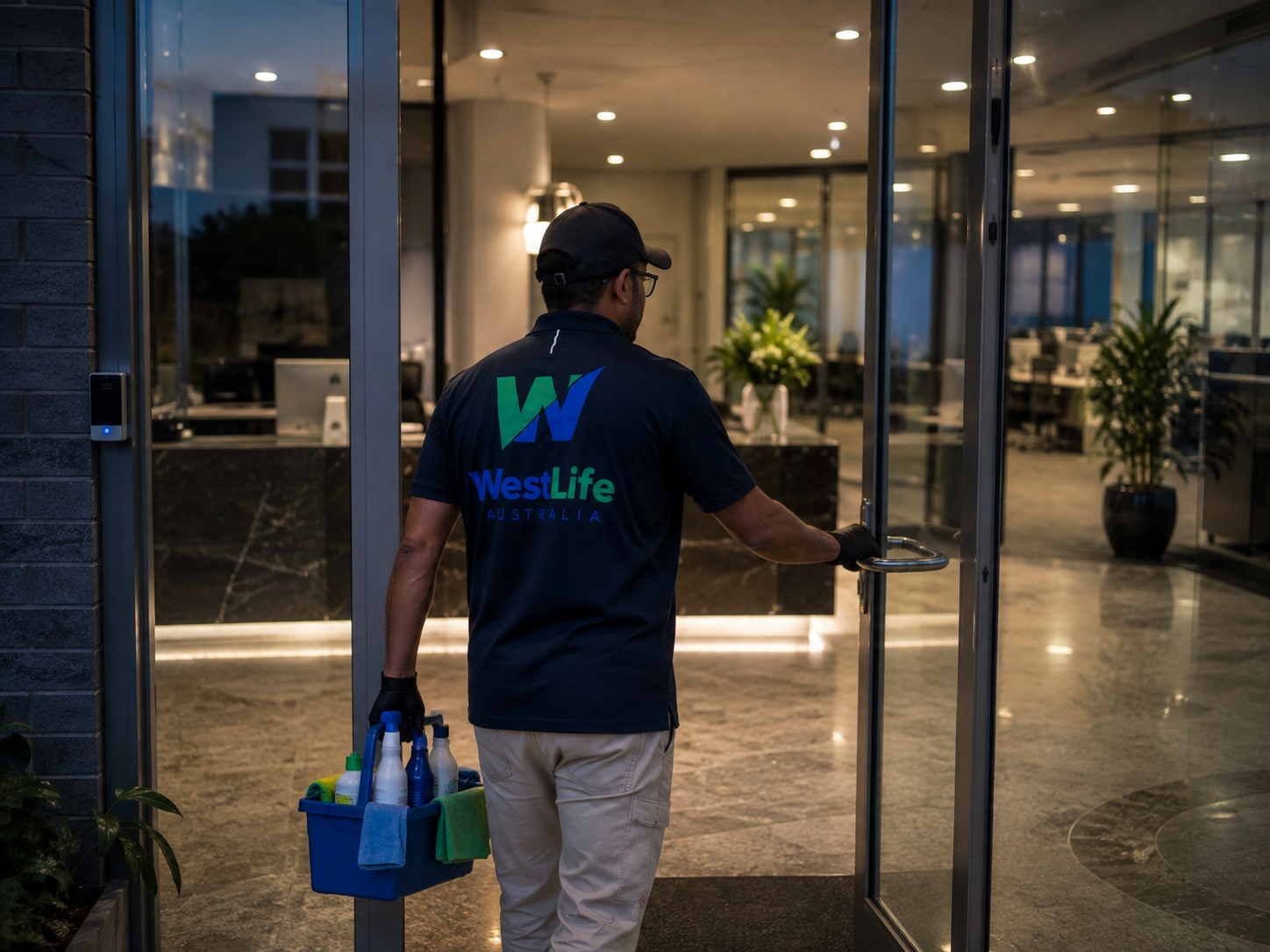
Minute 1: Check Your Reception and Entrance
Your entrance is usually the first part of your workplace visitors see.
Take a close look at:
- Entry doors
- Door handles
- Reception desk
- Glass doors
- Floors
- Entrance mats
- Visible fingerprints
- Corners and edges
Now ask yourself:
Would this entrance give a new customer a good first impression?
An entrance can look tidy while still having fingerprints on glass, dirt around the door or marks on the floor.
This is particularly important for businesses in Hobart where entrances can experience additional dirt during wet weather and periods of heavy foot traffic.
🟢 PASS
The entrance looks clean from both a normal and closer inspection.
🟡 NEEDS ATTENTION
There are a few visible marks or areas that need cleaning.
🔴 FAIL
The entrance immediately looks poorly maintained.
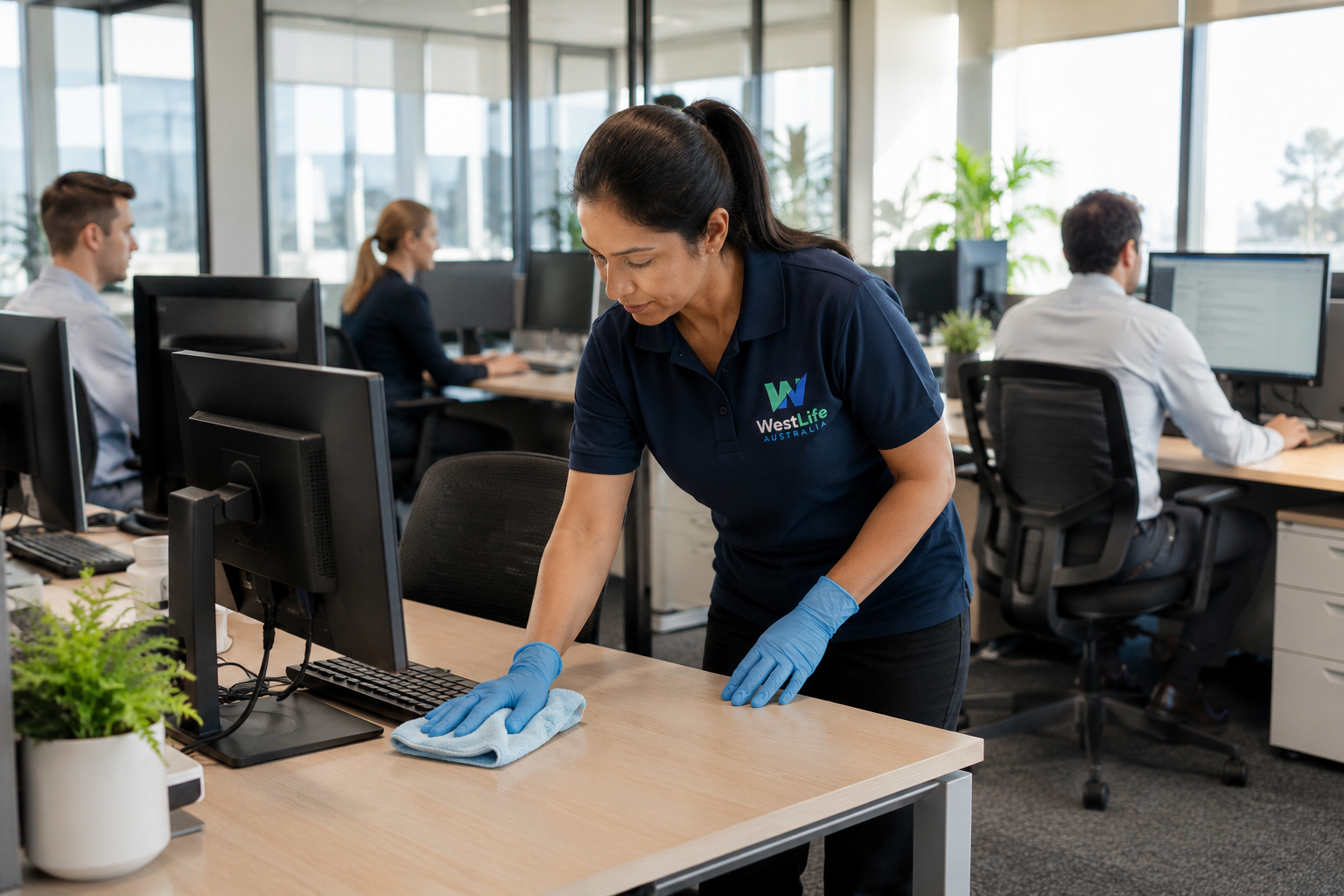
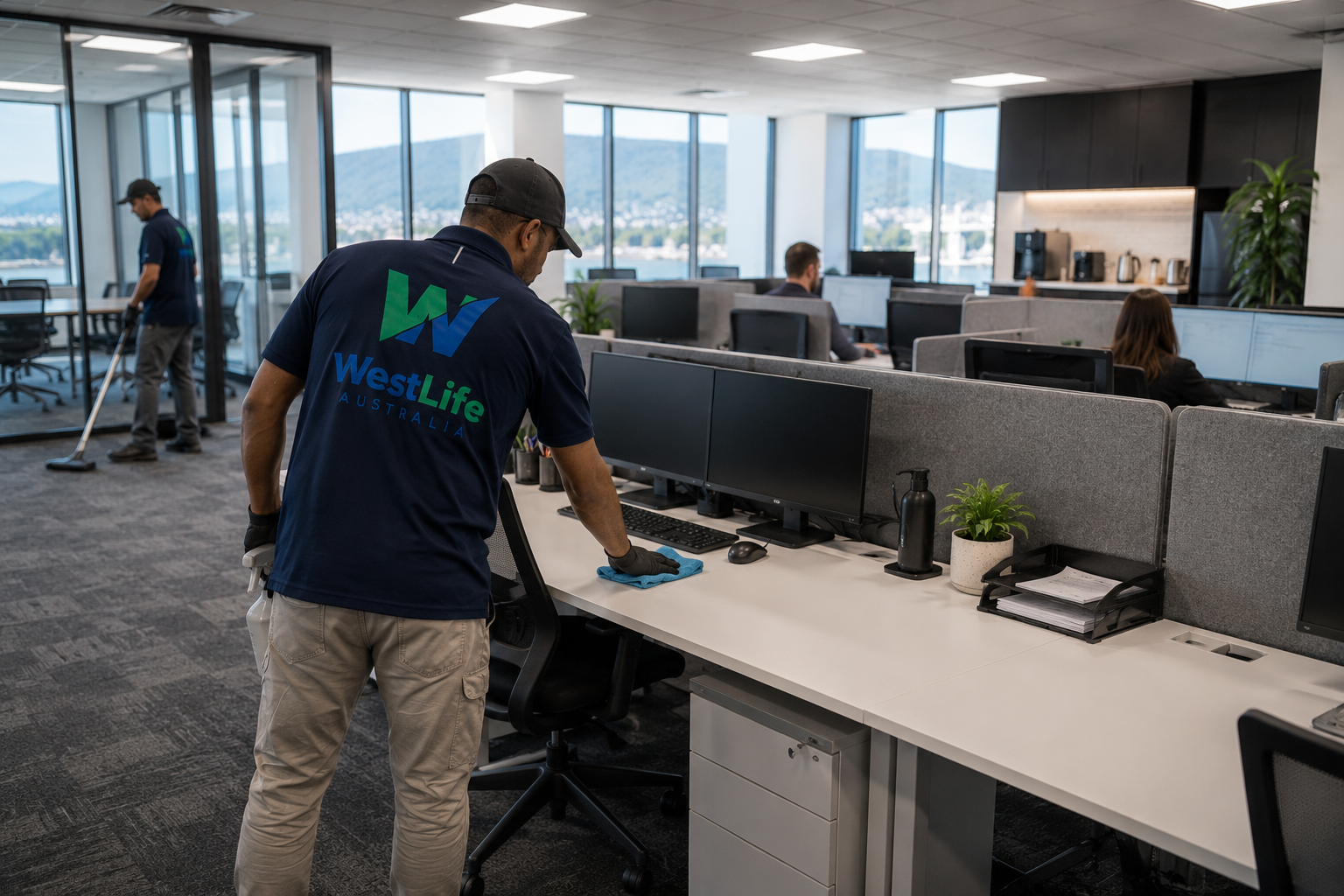
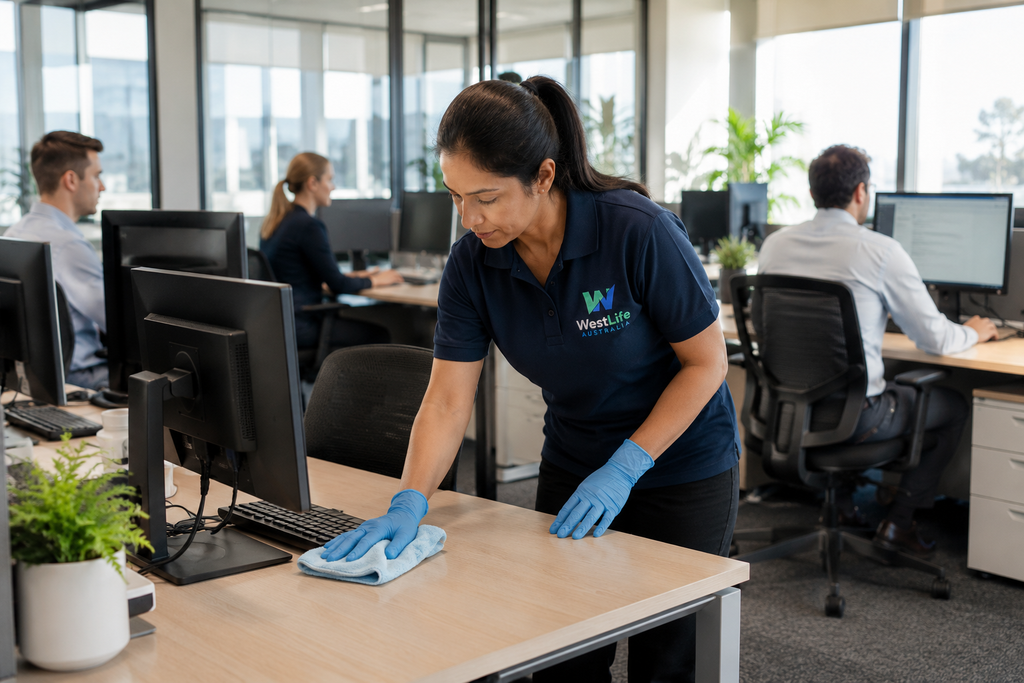
Minute 2: Look Closely at the Workstations
Now walk through several workstations.
Don’t just look at the desktops.
Check:
- Desk surfaces
- Areas around monitors
- Keyboard surroundings
- Chair areas
- Under desks
- Floors around workstations
- Nearby surfaces
Then ask:
Can you see dust without deliberately looking for it?
Workstations can be tricky because employees may have personal items covering some surfaces, while areas underneath desks and around furniture can be overlooked.
A well-planned office cleaning routine should clearly identify which workstation areas need regular attention.
Minute 3: Inspect the Kitchen and Break Room
Now head to the office kitchen or break room.
This is often one of the easiest places to spot whether a workplace cleaning routine is keeping up with daily use.
Check:
- Kitchen benches
- Sink
- Taps
- Microwave
- Refrigerator handles
- Cupboard handles
- Coffee machine area
- Floor
- Bin area
Ask yourself:
Would you feel comfortable preparing food here right now?
Shared kitchens can become messy quickly because many employees use the same surfaces throughout the day.
Even when the main bench looks clean, handles, appliance surfaces, sinks and areas around bins may need additional attention.
Minute 4: Check Bathrooms and High-Touch Areas
Now inspect the bathrooms and frequently touched surfaces throughout the workplace.
Bathroom check
Look at:
- Basins
- Mirrors
- Taps
- Toilets
- Floors
- Hand-drying areas
- Door handles
High-touch areas
Then check:
- Door handles
- Light switches
- Handrails
- Shared equipment
- Common-area surfaces
Ask:
Are the areas people touch most actually receiving regular attention?
These areas are part of the everyday experience of employees and visitors, so they should have a clear place within the workplace cleaning routine.
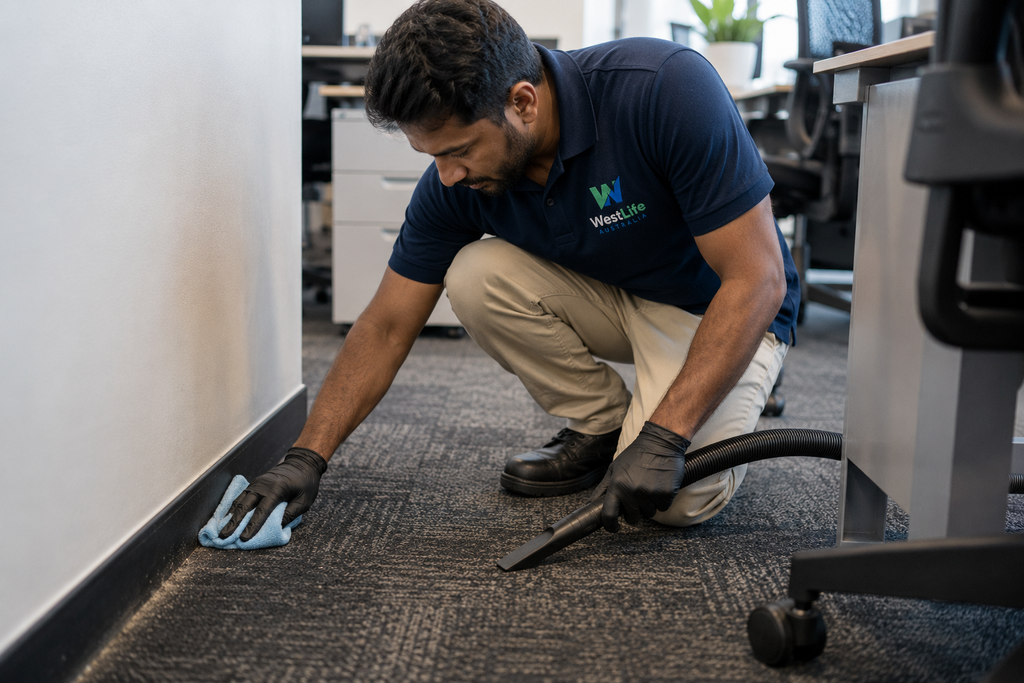
Minute 5: Look at Floors, Corners and the Areas You Normally Ignore
This is where the five-minute test gets interesting.
Stop looking at eye level.
Look down.
Then look under.
Then look behind.
Check:
- Floor edges
- Corners
- Under desks
- Behind bins
- Skirting boards
- High-traffic walkways
- Areas behind furniture
Ask:
Does your office still look clean when you stop looking at eye level?
These areas aren’t always obvious during a quick walkthrough, but dust and dirt can gradually accumulate where everyday cleaning doesn’t reach.
What’s Your Office Cleanliness Score?
You’ve now checked seven areas.
Give yourself a simple score.
🟢 6–7 Areas Passed
Your workplace appears to have a good basic cleaning routine.
Keep monitoring the areas that receive the most daily traffic.
🟡 3–5 Areas Passed
Your office may need more attention in specific areas or a more detailed cleaning schedule.
Look at which areas repeatedly receive the lowest scores.
🔴 0–2 Areas Passed
Your current cleaning routine may not be keeping up with the way your workplace is being used.
It could be time to review your cleaning frequency, checklist or overall cleaning arrangement.
Remember: this is a quick visual test, not a professional cleaning inspection.
Why Can an Office Look Clean but Still Fail the Test?
The problem is often that visible areas naturally receive the most attention.
For example:
Easy to notice:
- Open floors
- Desks
- Bins
- Reception areas
Easy to overlook:
- Door handles
- Corners
- Under furniture
- Floor edges
- High-touch surfaces
- Glass edges
- Areas behind equipment
This means an office can look tidy from a distance while still having areas that require more detailed cleaning.
A good cleaning plan should consider both the areas people immediately notice and the areas they don’t.
How Often Should These Areas Be Cleaned?
There isn’t one cleaning schedule that works for every office.
The right frequency depends on factors such as:
- Number of employees
- Daily foot traffic
- Office size
- Type of business
- Shared facilities
- Customer and visitor traffic
- Operating hours
- Seasonal conditions
For example, a small office may have different requirements from a busy workplace with many employees and visitors.
The same applies across the region. An office in Hobart may have different cleaning priorities from a workplace in Kingston, Launceston, Devonport or Burnie.
The goal isn’t simply to clean more often.
It’s to create a cleaning schedule that matches how your workplace is actually used.
What Should a Professional Office Cleaning Plan Cover?
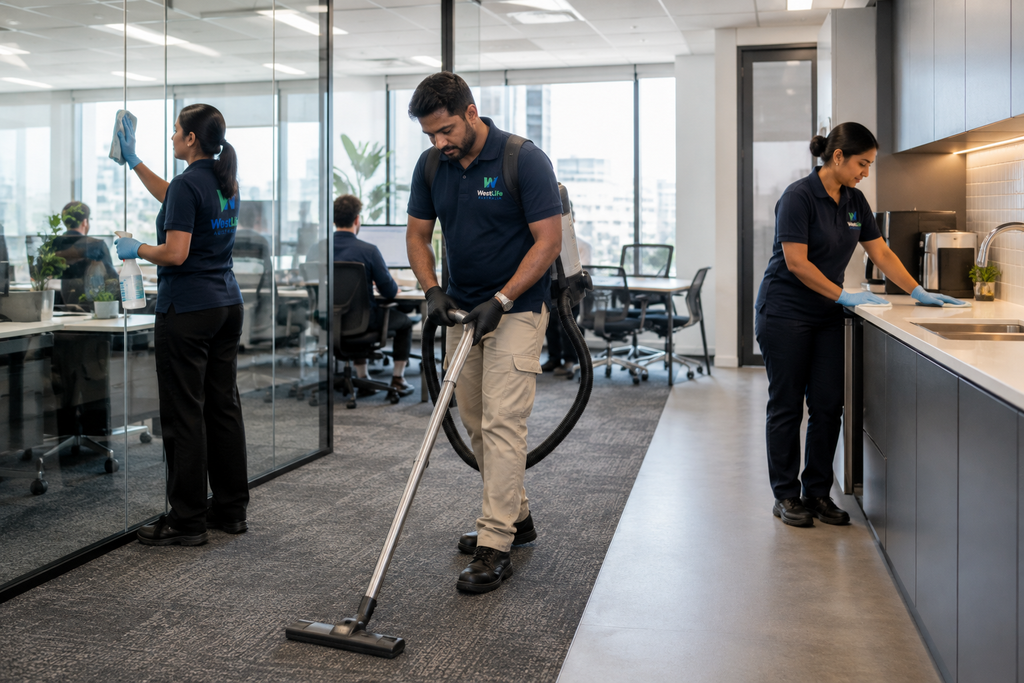
A professional office cleaning plan should be based on the specific workplace rather than relying on a generic checklist.
Regular Cleaning
Depending on the workplace, this may include:
- Workstations
- Common areas
- Floors
- Kitchens and break rooms
- Bathrooms
- Waste removal
- High-touch surfaces
Periodic Cleaning
Some areas may require less frequent but more detailed attention, such as:
- Carpet cleaning
- Detailed glass cleaning
- Deep cleaning
- Less-accessible areas
- Additional floor maintenance
The cleaning requirements should be reviewed as the workplace changes.
If your business grows, moves to a larger office or experiences increased foot traffic, your existing cleaning plan may no longer be enough.
What If Your Office Fails the 5-Minute Test?
Don’t assume you need to completely change your cleaning routine immediately.
Start by identifying where the problems are happening repeatedly.
If only one or two areas fail
Review those specific cleaning tasks and consider whether they need more frequent attention.
If several areas fail
Your cleaning frequency or cleaning checklist may need to be adjusted.
If the same areas keep failing
This may indicate that your current cleaning plan isn’t aligned with how your workplace operates.
For example, an office with heavy foot traffic may require a different approach from a small workplace with only a few employees.
Office Cleaning in Hobart Should Work Around Your Business
Professional office cleaning isn’t simply about making a workplace look tidy.
A useful cleaning plan should consider:
Your workplace → Your people → Your daily activity → Your schedule → Your cleaning requirements
Businesses also need flexibility.
Cleaning may need to take place before employees arrive, after business hours, during evenings or at other suitable times to minimise disruption.
For businesses across Hobart, Kingston, Launceston, Devonport and Burnie, the right cleaning plan should be built around the individual workplace rather than applying exactly the same routine everywhere.
Did Your Hobart Office Pass the Test?
So, how did your workplace perform?
7/7
Excellent. Your workplace appears well maintained.
5–6
Good. Review the areas that need occasional attention.
3–4
Needs improvement. Your current cleaning routine may need some adjustments.
0–2
Time for a closer look. Your workplace may need a more structured cleaning plan.
The five-minute test isn’t designed to replace a professional assessment.
It’s simply a quick way to identify areas you may not normally notice during a busy working day.
A Clean Office Is More Than a Tidy Office
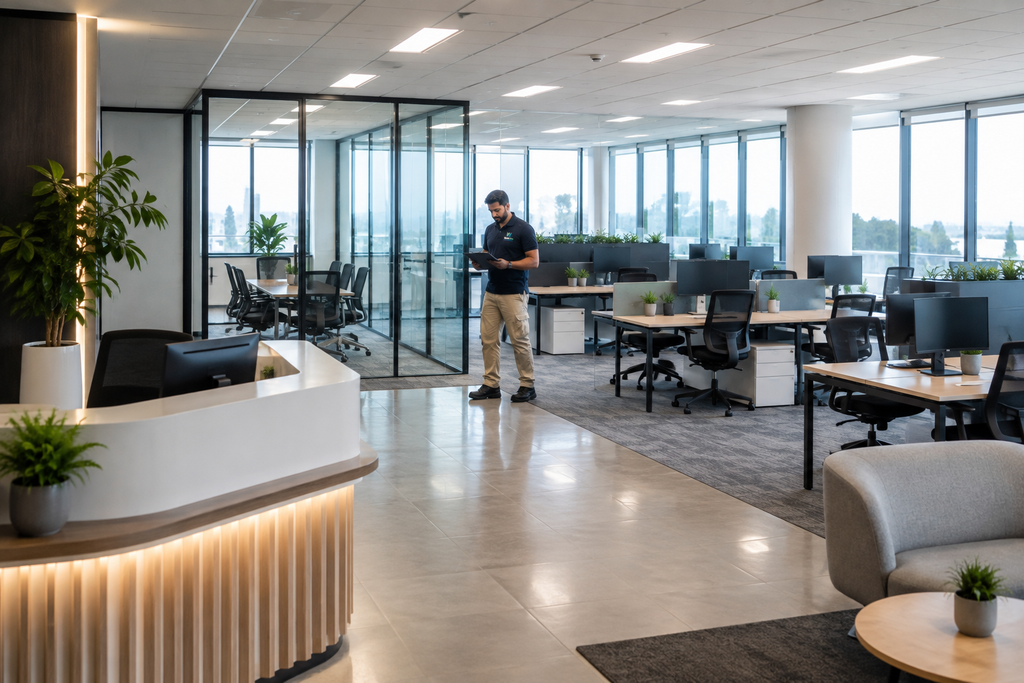
Your workplace may look clean when you walk through it quickly.
But taking five minutes to inspect the details can reveal areas that need more attention.
From reception areas and workstations to kitchens, bathrooms, high-touch surfaces, floor edges and overlooked corners, every part of an office contributes to how clean and well maintained the workplace feels.
For businesses looking for Office Cleaning Hobart, the best approach is to create a cleaning plan based on the way the workplace is actually used.
Whether your business operates in Hobart, Kingston, Launceston, Devonport or Burnie, a tailored cleaning schedule can help keep your workplace consistently clean and professional.
Did Your Office Fail the 5-Minute Test?
If you found dust, marks, neglected corners or areas that repeatedly need additional attention, it may be time to review your current cleaning routine.
Westlife Australia provides professional office cleaning solutions tailored to the needs of businesses across Hobart and surrounding areas.
From regular office cleaning to periodic deep cleaning and customised workplace cleaning schedules, our team can help create a cleaning solution that fits your business.
Contact Westlife Australia today to discuss your office cleaning requirements and request a tailored quote.