


Should Your Office Be Cleaned During the Day or After Hours?
Your office needs to be cleaned regularly. But have you ever considered when it should actually be cleaned?
Cleaning during business hours means cleaners are working while employees, customers and visitors are using the workplace. Cleaning after hours means the cleaning team can work once most employees have left.
Neither option is automatically right for every business.
The best choice depends on your office size, operating hours, staff numbers, customer traffic and cleaning requirements.
So, should you choose daytime cleaning or after hours office cleaners in Hobart?
Let’s compare both options.
Daytime vs After-Hours Office Cleaning: What’s the Difference?
The basic difference is simple.
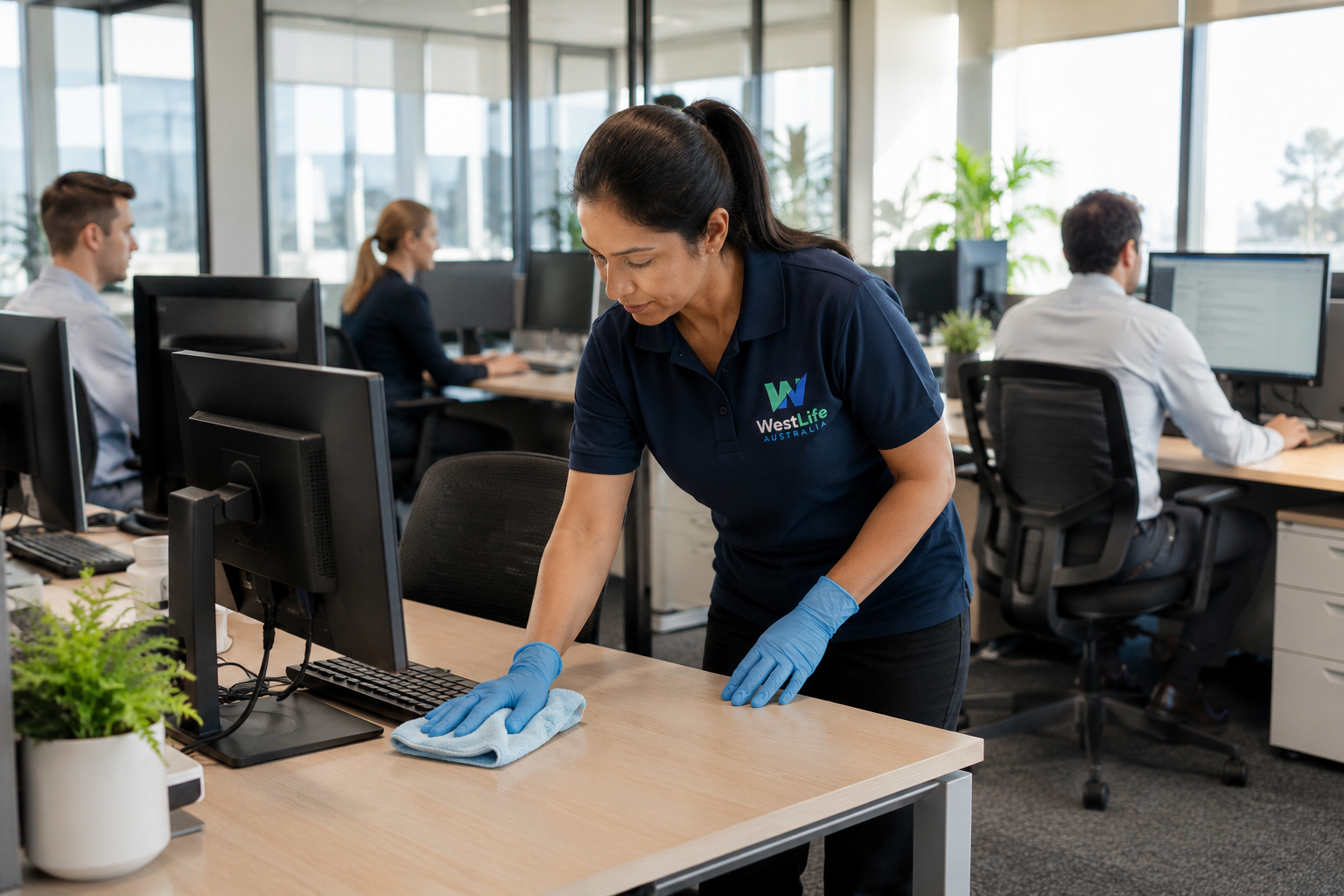
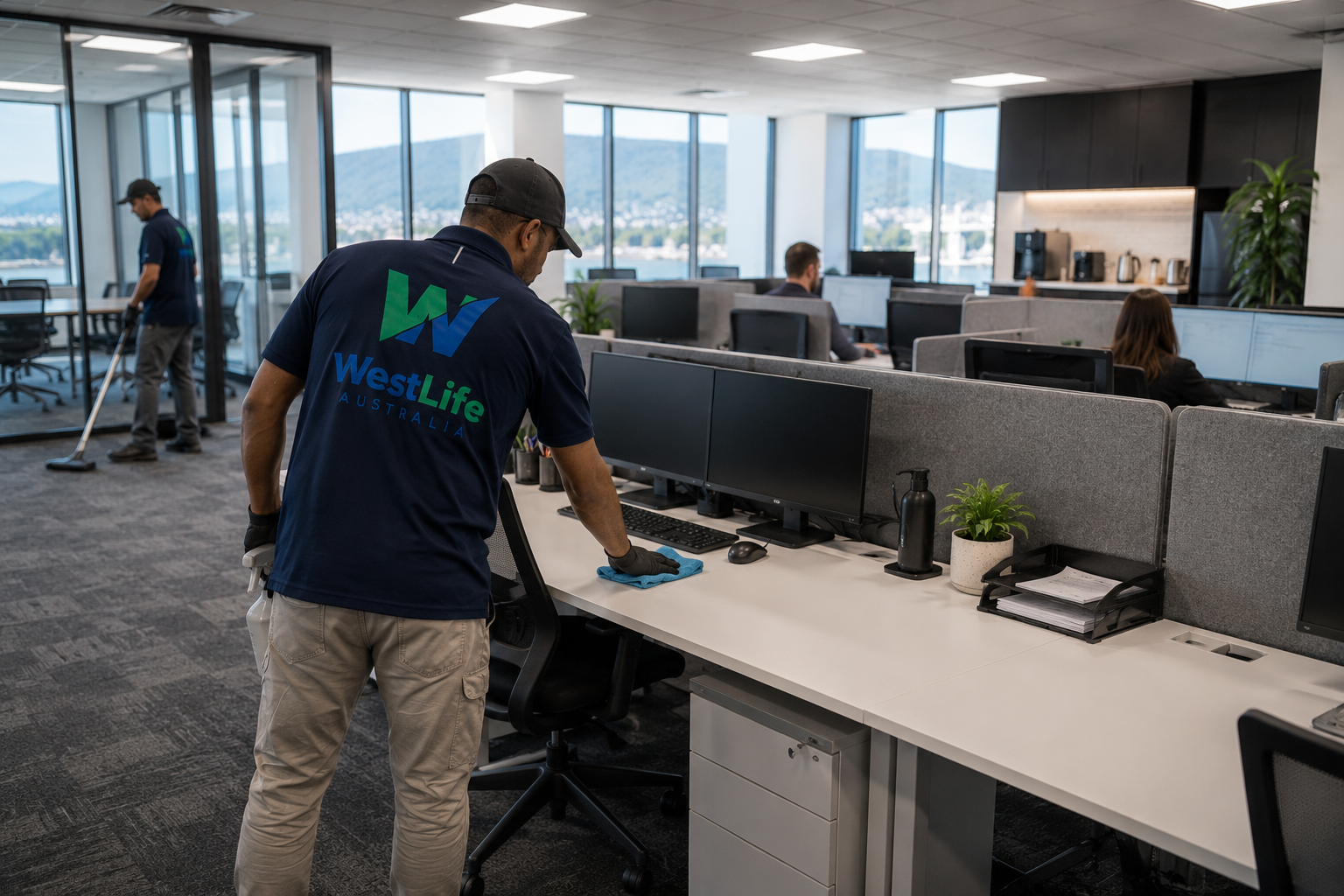
Daytime office cleaning takes place while your workplace is operating. Cleaners may work around employees, meetings, customers and normal business activity.
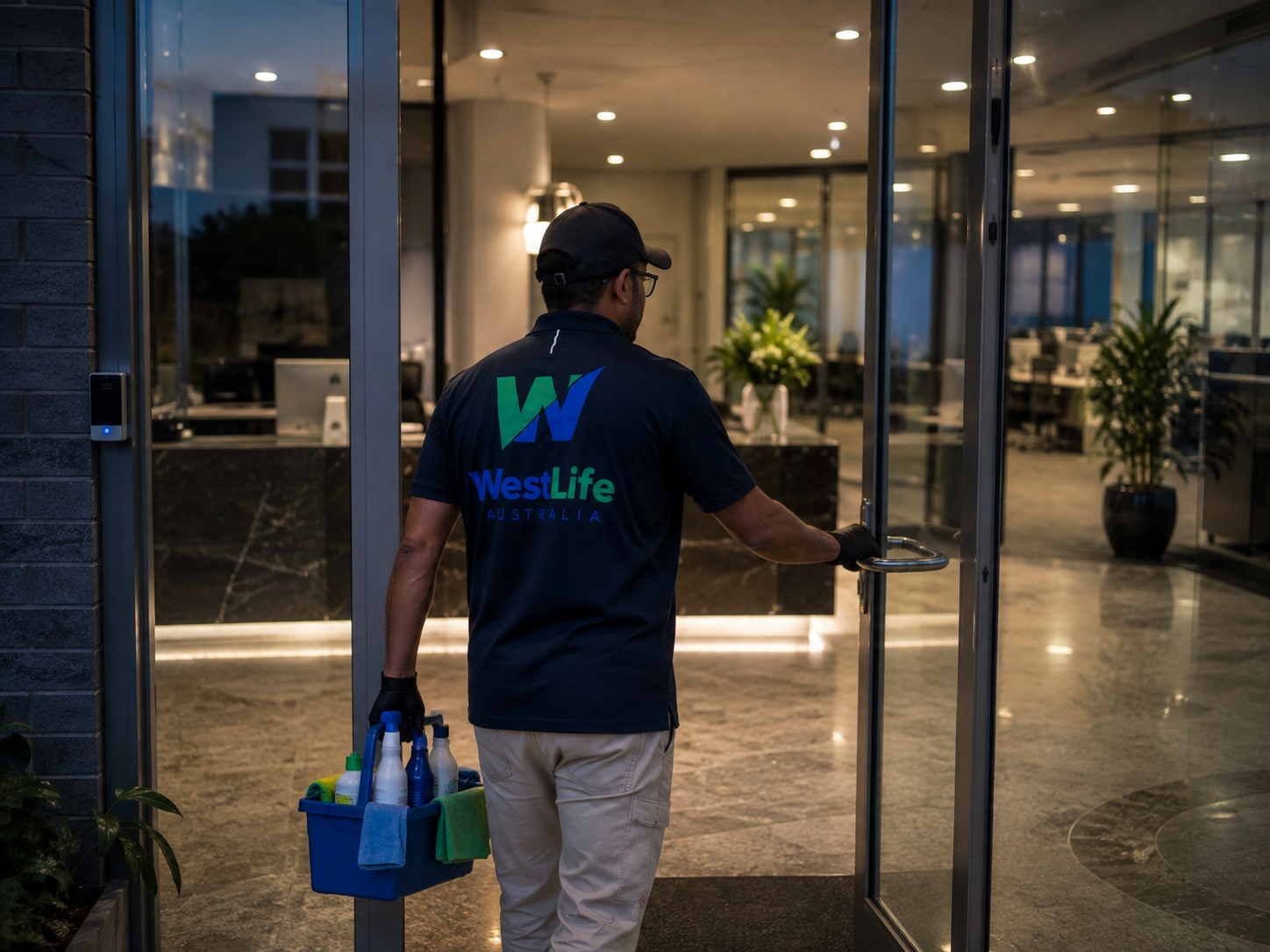
After-hours office cleaning takes place before employees arrive, after the working day ends, during evenings or at another agreed time when the office has fewer people inside.
The right schedule depends on how your business operates.
Factors to consider include:
- Number of employees
- Office size
- Customer and visitor traffic
- Operating hours
- Type of business
- Shared facilities
- Workplace layout
- Cleaning requirements
What Are the Advantages of Daytime Office Cleaning?
Daytime cleaning can work well for some businesses.
For example, a workplace may have periods during the day when fewer employees are present. Cleaning during these quieter periods can allow cleaners to complete certain tasks without significantly affecting normal operations.
Daytime cleaning can also be useful when a business needs attention to spills, visible mess or other immediate cleaning requirements.
Potential advantages include:
- Cleaning can take place while the office is occupied
- Immediate cleaning needs can be addressed
- Employees can communicate with cleaning staff when necessary
- Suitable for businesses with flexible working arrangements
- Cleaning can take place during quieter periods
However, daytime cleaning can also present challenges.
Employees may need to work around cleaning activities, recently cleaned floors or temporarily unavailable shared spaces. Customers or visitors may also encounter cleaning activity while visiting the business.
For some workplaces, this isn’t a major concern.
For others, it can make after-hours cleaning a more practical option.
What Are the Advantages of After-Hours Office Cleaning?
This is one reason businesses consider after hours office cleaners in Hobart.
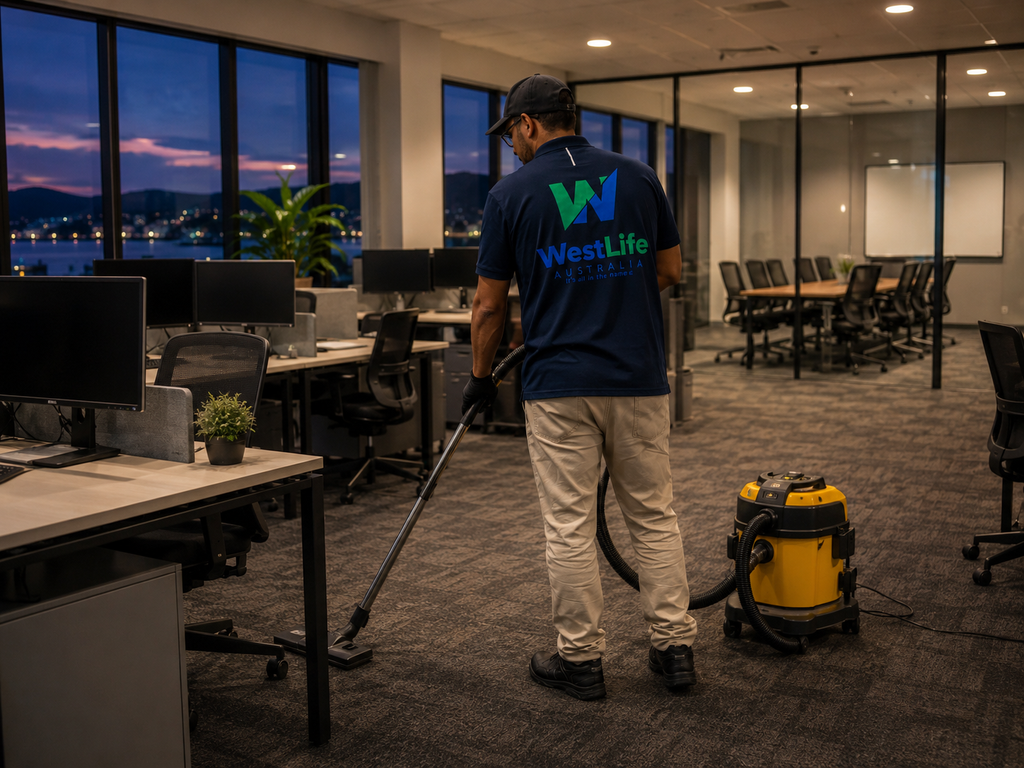
When most employees have left for the day, cleaners can work through the workplace with fewer people moving between rooms and shared areas.
After-hours cleaning can help with:
- Reducing disruption to employees
- Cleaning shared spaces when they’re less busy
- Maintaining kitchens and break rooms after peak usage
- Cleaning floors without constant foot traffic
- Cleaning bathrooms with fewer interruptions
- Preparing the office for the following working day
For businesses that want their workplace cleaned without having cleaning activities happening around employees and visitors, an after-hours schedule can be a practical solution.
When Does Daytime Cleaning Make More Sense?
After-hours cleaning isn’t automatically better.
Daytime cleaning may be suitable for businesses where:
- Employees work flexible schedules
- The workplace operates throughout the evening
- There are periods of low activity during the day
- Cleaning needs to happen throughout the working day
- Employees and customers are comfortable with cleaning activities nearby
For example, a workplace with a flexible schedule and plenty of unused areas during the day may be able to accommodate cleaners without much disruption.
The key is understanding how your workplace actually operates.
When Does After-Hours Cleaning Make More Sense?
After-hours cleaning can be particularly useful for offices where daytime activity makes cleaning difficult.
Your office has lots of employees
A busy workplace can be easier to clean once most employees have gone home.
Your business receives regular visitors
Cleaning can take place outside the busiest visitor periods, helping maintain a professional environment during business hours.
Your workplace has meeting rooms
Meeting rooms can be cleaned once meetings and appointments have finished for the day.
Your office has a shared kitchen
Kitchen benches, sinks, floors and other shared areas can be cleaned after the day’s main usage.
You want minimal disruption
If your priority is keeping cleaning activities away from employees and customers, after-hours cleaning may be worth considering.
What Happens During an After-Hours Office Clean?
What actually happens once everyone goes home?
A professional cleaning visit can follow a structured routine based on the requirements of the workplace.
1. Workstations and common areas
Desks, surfaces and shared areas can be cleaned according to the agreed cleaning plan.
2. Kitchen and break areas
Benches, sinks, appliances, floors and other shared surfaces can receive attention.
3. Bathrooms
Bathrooms can be cleaned and maintained as part of the regular cleaning schedule.
4. Floors
Depending on the flooring, cleaners may vacuum, mop or complete other appropriate floor-care tasks.
5. Waste removal
Bins can be emptied and waste areas maintained.
6. High-touch areas
Frequently touched surfaces such as door handles and switches can be included in the cleaning routine.
7. Final check
The workplace can be checked before the cleaning team finishes, helping ensure the office is ready for the next working day.
The exact tasks should always be agreed based on the individual workplace.
What About Security and Office Access After Hours?
This is an important question to consider before arranging after-hours cleaning.
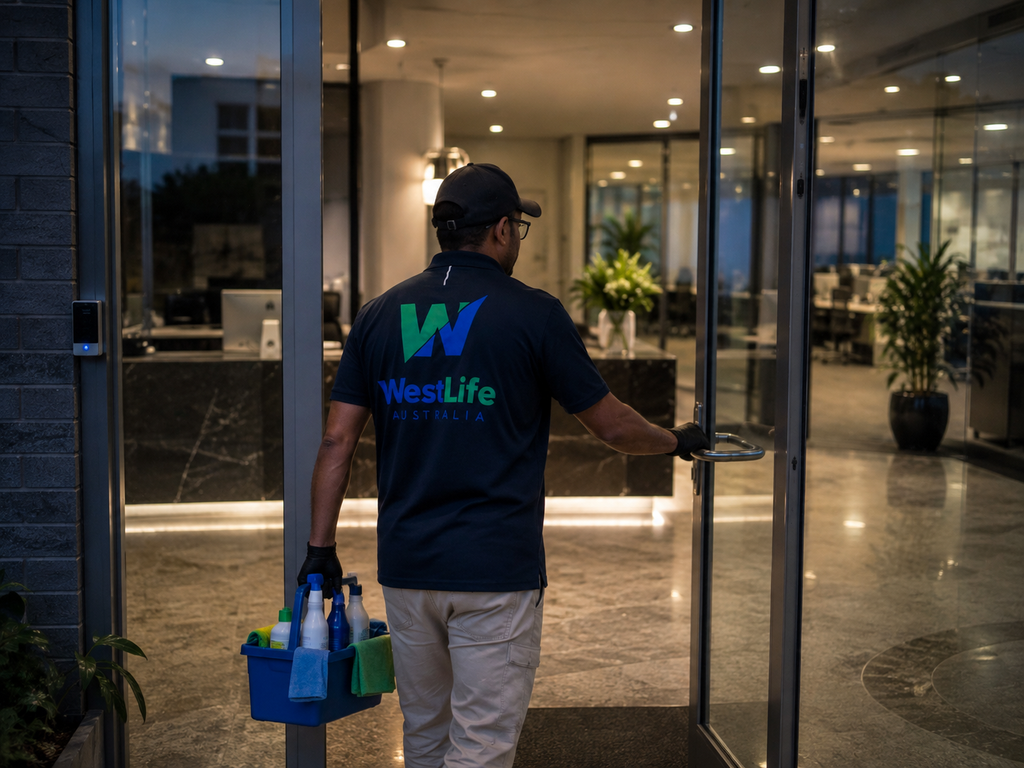
If cleaners are working after employees have left, the business needs a clear process for access and securing the premises.
Before starting an after-hours cleaning arrangement, businesses should discuss:
- Who provides access to the premises?
- How are keys or access codes managed?
- Who is responsible for locking the building?
- Which areas require restricted access?
- How should alarms or security systems be handled?
- Who should the cleaning team contact if there is an issue?
These details should be agreed with your cleaning provider before service begins.
A clear process makes after-hours cleaning easier for everyone involved.
How Often Should an Office Be Cleaned After Hours?
There isn’t one cleaning frequency that works for every business.
The right schedule depends on factors such as:
- Number of employees
- Daily foot traffic
- Office size
- Industry
- Number of shared facilities
- Customer traffic
- Kitchen usage
- Operating hours
A busy office may require cleaning every working day, while a smaller workplace may require a less frequent schedule.
The important thing is to match the cleaning frequency to the way your office is used.
Daytime vs After-Hours Cleaning: Which Is Better?
Here’s a quick comparison.
| Factor | Daytime Cleaning | After-Hours Cleaning |
| Employee disruption | Can be higher | Usually lower |
| Customer interaction | Possible | Usually avoided |
| Access | Easy while office is open | Requires access arrangements |
| Shared spaces | May be occupied | Usually easier to clean |
| Flexibility | Suitable for some workplaces | Useful for offices outside operating hours |
| Workplace preparation | Cleaning happens during operations | Office can be prepared before opening |
Neither option is universally better.
The best choice depends on your business.
What About Hobart Businesses?
Every workplace has its own operating pattern.
A busy office in central Hobart may have different requirements from a smaller workplace in Kingston.
The same applies to businesses in Launceston, Devonport and Burnie.
Factors such as employee numbers, customer traffic, office layout and operating hours can all influence the most suitable cleaning schedule.
For this reason, an office cleaning plan should be based on the actual requirements of the workplace rather than simply choosing a standard schedule.
Questions to Ask Before Choosing Your Cleaning Schedule
Before deciding between daytime and after-hours cleaning, ask yourself:
1. When are most employees in the office?
If your workplace is busy throughout the day, after-hours cleaning may cause less disruption.
2. When do customers and visitors usually arrive?
If your office receives visitors throughout the day, cleaning outside those periods may be more practical.
3. Which areas receive the most traffic?
Reception areas, kitchens, bathrooms and shared spaces may need different cleaning schedules.
4. Would daytime cleaning interrupt employees?
Consider whether vacuuming, mopping or cleaning shared spaces could interfere with normal work.
5. Does your building allow after-hours access?
Make sure access, keys and security arrangements can be managed appropriately.
6. How frequently does your workplace actually need cleaning?
A high-traffic office may require more frequent cleaning than a smaller workplace.
7. Which tasks need to happen every day?
Identify essential daily tasks and separate them from periodic cleaning requirements.
Can You Combine Daytime and After-Hours Cleaning?
Yes.
Businesses don’t necessarily have to choose only one option.
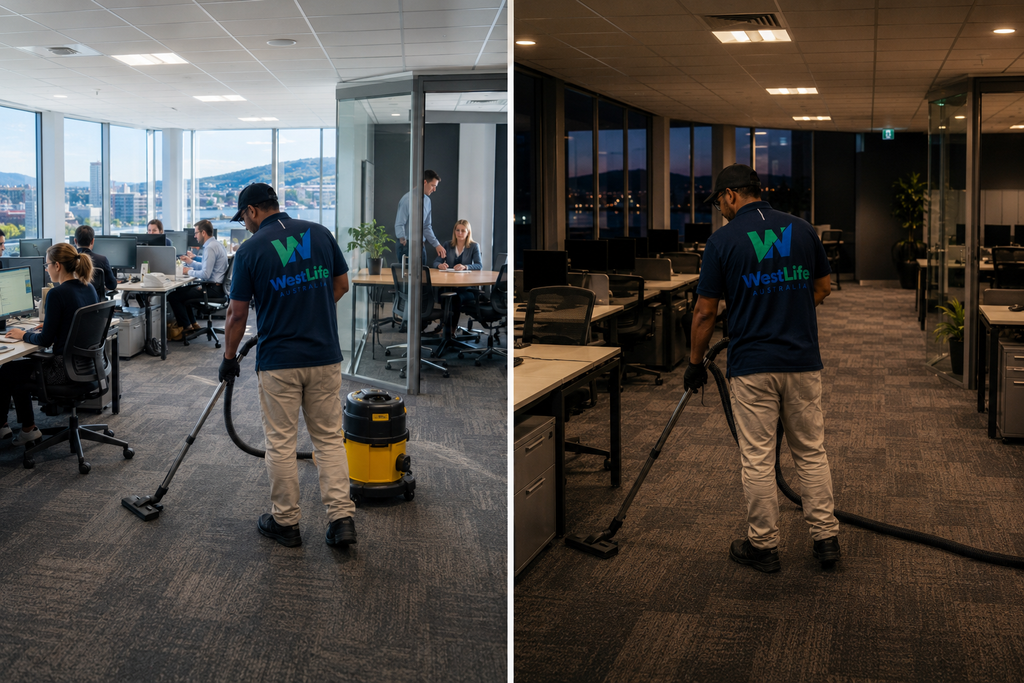
A workplace could use daytime cleaning for immediate or visible cleaning needs while scheduling more detailed routine cleaning after hours.
For example:
During the day:
- Address visible spills
- Handle immediate cleaning needs
- Maintain high-use areas when necessary
After hours:
- Vacuum and mop floors
- Clean bathrooms
- Clean kitchens
- Empty bins
- Clean common areas
- Complete other scheduled tasks
This approach may be useful for larger or high-traffic workplaces where cleaning requirements vary throughout the day.
How to Choose the Right Cleaning Schedule for Your Office
There are a few simple ways to determine which option may suit your workplace.
Daytime cleaning may suit you if:
- Your office has quieter periods during the day
- Employees are comfortable with cleaning activity
- Your business requires cleaning throughout operating hours
- Your workplace has flexible working arrangements
After-hours cleaning may suit you if:
- You want minimal disruption during working hours
- Most employees leave at the end of the day
- Shared areas are heavily used during business hours
- You want the office prepared before employees arrive
A combination may suit you if:
- Your workplace has high daily traffic
- Some cleaning needs to happen during the day
- Detailed cleaning is easier to complete after hours
So, Should Your Office Be Cleaned During the Day or After Hours?
There isn’t a single answer for every business.
The best cleaning schedule is the one that fits the way your workplace operates.
For some businesses, daytime cleaning can work perfectly well.
For others, after hours office cleaners in Hobart can provide a practical way to maintain the workplace while reducing disruption to employees and visitors.
The important thing is to consider your office’s actual needs rather than choosing a cleaning schedule simply because it is the most common option.
Need Office Cleaning Without Disrupting Your Workday?
If your business is considering after hours office cleaners in Hobart, Westlife Australia can help you develop a cleaning schedule around your workplace operations.
We provide professional office cleaning solutions for businesses across Hobart, Kingston, Launceston, Devonport and Burnie, with cleaning schedules tailored to the requirements of each workplace.
Whether you need regular after-hours cleaning, daytime cleaning or a combination of both, the right approach starts with understanding your office.
Contact Westlife Australia today to discuss your office cleaning requirements and request a tailored quote.
FAQs — Should Your Office Be Cleaned During the Day or After Hours?
1. Are after hours office cleaners in Hobart better for busy workplaces?
After hours office cleaners in Hobart can be a better option for busy workplaces because cleaning can take place when employees and customers have left. This reduces disruption and allows cleaners to work more efficiently.
2. What do after hours office cleaners in Hobart usually clean?
After hours office cleaners in Hobart can handle routine tasks such as vacuuming, mopping, dusting, rubbish removal, bathroom cleaning, kitchen cleaning and high-touch surface cleaning, depending on your agreed cleaning plan.
3. Can after hours office cleaners in Hobart clean while the building is closed?
Yes. After hours office cleaners in Hobart can work before opening, after closing or during weekends, depending on your business schedule and access arrangements. Security procedures and building access should be agreed before cleaning begins.
4. Is daytime office cleaning better than using after hours office cleaners in Hobart?
Not necessarily. Daytime cleaning can work well when your workplace has suitable space and low disruption, while after hours office cleaners in Hobart are often preferred when businesses want cleaning completed outside working hours.
5. How do I choose the right cleaning schedule for my Hobart office?
Consider your office hours, employee numbers, customer traffic, cleaning requirements and how much disruption you can tolerate. After hours office cleaners in Hobart may suit workplaces that need a clean environment ready before staff arrive each morning.