


End of Lease Cleaning Hobart: What Gets Missed Before Inspection?
Moving out of a rental property involves more than packing boxes and handing back the keys. Before the final inspection, tenants often need to make sure the property is left in a clean condition.
This is where the end of lease cleaning Hobart becomes important.
Areas that receive little attention during normal household cleaning can become much more noticeable when the property is empty. Window tracks, cupboards, skirting boards, bathroom details and kitchen appliances are just some of the areas that can be overlooked.
Why Does End of Lease Cleaning Need More Attention?
Regular house cleaning is usually focused on keeping a property comfortable and presentable while someone is living there.
An end-of-lease clean is different.
Once furniture and personal belongings have been removed, areas that were previously hidden become much easier to see.
For example:
- Dust behind furniture
- Marks around doors
- Dirt along skirting boards
- Dust inside cupboards
- Build-up around bathroom fixtures
- Grease around kitchen appliances
- Dirt in window tracks
- Debris around floor edges
This is why a property can look clean during everyday living but still require additional attention before a final inspection.
10 Areas Commonly Missed Before a Rental Inspection
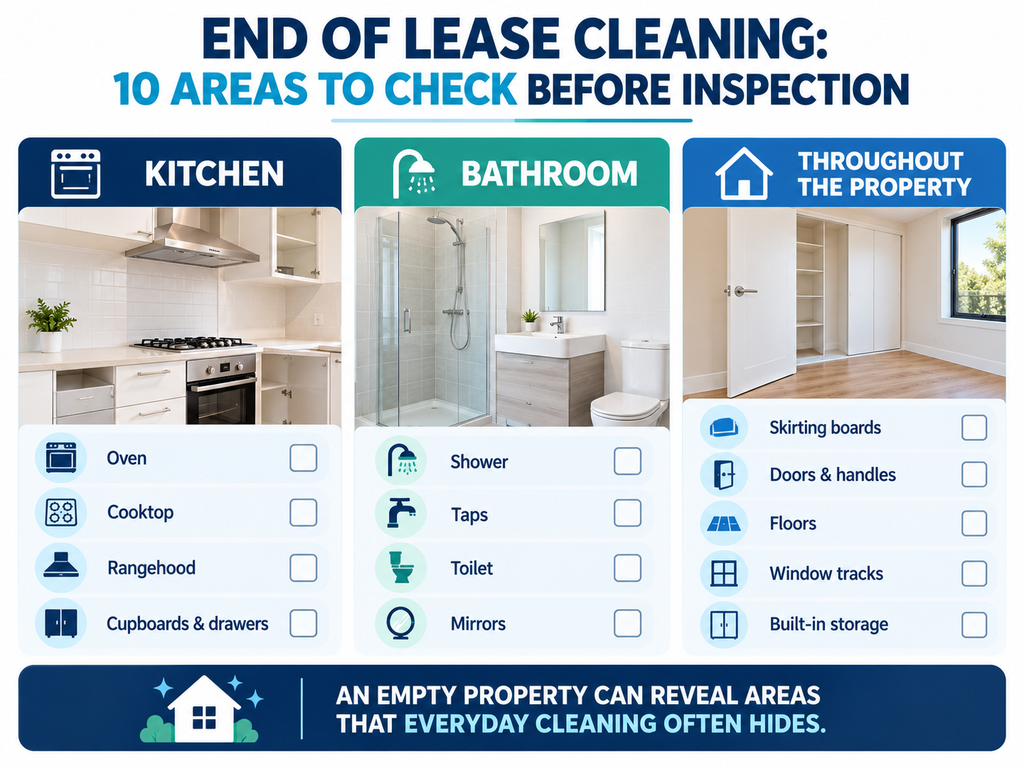
1. Inside Kitchen Cupboards and Drawers
Kitchen cupboards are easy to overlook because their interiors aren’t always part of routine cleaning.
Before moving out, check:
- Cupboard shelves
- Drawer interiors
- Cabinet corners
- Handles
- Food residue
- Dust and crumbs
Empty cupboards make dirt much easier to see, particularly around corners and edges.
2. Oven and Kitchen Appliances
The kitchen is one of the areas that may require detailed cleaning before moving out.
Pay attention to:
- Oven interior
- Oven door
- Cooktop
- Rangehood
- Microwave
- Appliance surfaces
- Handles
- Grease around cooking areas
These areas can accumulate residue gradually during a tenancy.
A quick wipe of the kitchen bench won’t necessarily address built-up grease or residue around appliances.
3. Window Tracks and Frames
Windows may look clean from a distance while dirt remains around the edges.
Before an inspection, check:
- Window tracks
- Frames
- Sills
- Corners
- Accessible glass surfaces
Window tracks can collect dust and debris over time, particularly in areas that aren’t cleaned regularly.
4. Skirting Boards and Floor Edges
Skirting boards are another area that can disappear from view during normal household cleaning.
Furniture can hide:
- Dust along skirting boards
- Dirt in corners
- Debris around floor edges
- Marks near walls
Once furniture has been removed, these areas become much more visible.
A detailed final clean should therefore include the edges of rooms rather than focusing only on the centre of the floor.
5. Bathroom Details
Bathrooms receive regular cleaning, but smaller details can still be missed.
Before moving out, check:
- Shower screens
- Shower fixtures
- Taps
- Basin edges
- Toilet exterior
- Mirrors
- Tile surfaces
- Floor corners
- Ventilation areas
Pay particular attention to areas around fixtures where soap residue, dust or mineral deposits may accumulate.
6. Doors, Handles and Frames
Doors are touched frequently but their surrounding areas may receive less attention.
Check:
- Door surfaces
- Door handles
- Door frames
- Edges
- Areas around light switches
- Marks near frequently used entrances
These are relatively small areas, but they can make a difference to the overall appearance of a freshly vacated property.
7. Inside Built-In Wardrobes and Storage
Built-in storage can become overlooked during moving day.
Once clothing and belongings have been removed, check:
- Shelves
- Floor areas
- Corners
- Doors
- Tracks
- Handles
Dust can remain inside storage areas even when the rest of the bedroom has been cleaned.
8. Behind and Under Furniture
Furniture can hide dirt for months.
When the property is empty, check areas such as:
- Under beds
- Behind cabinets
- Behind sofas
- Under tables
- Around appliance edges
- Behind movable furniture
This is one reason an end-of-lease clean can involve more detailed work than regular weekly cleaning.
9. Light Switches and Frequently Touched Areas
Small high-touch areas can easily be overlooked when cleaning an entire property.
Look at:
- Light switches
- Door handles
- Cabinet handles
- Tap handles
- Appliance handles
- Frequently touched surfaces
These areas may show fingerprints, marks and accumulated dirt.
10. Floor Corners and Hard-to-Reach Areas
The final area to check is often the edge of the floor rather than the centre.
Look carefully at:
- Room corners
- Floor edges
- Areas around skirting boards
- Behind doors
- Under accessible furniture
- Around built-in cabinets
Vacuuming or mopping the middle of a room doesn’t necessarily remove everything around the perimeter.
End of Lease Cleaning vs Regular House Cleaning
One of the easiest ways to understand the difference is to look at the purpose of each service.
Regular house cleaning
Usually focuses on maintaining the property while it is occupied.
Typical tasks may include:
- Vacuuming
- Mopping
- Dusting
- Bathroom cleaning
- Kitchen cleaning
- General surface cleaning
End-of-lease cleaning
Focuses on preparing the property for handover after the tenant has moved out.
This may require greater attention to:
- Empty cupboards
- Appliances
- Window tracks
- Skirting boards
- Doors and frames
- Floor edges
- Built-in storage
- Areas previously hidden by furniture
The exact cleaning requirements can depend on the property and the agreement between the tenant and property manager.
Should You Clean Everything Yourself Before the Inspection?
That depends on the property, the condition and how much time you have available.
A DIY clean can work when the property is already well maintained and you have enough time to work through every area.
However, moving can involve several competing tasks:
- Packing
- Moving furniture
- Cleaning
- Final repairs
- Utility changes
- Property inspection
- Key handover
Professional cleaning can help when you need a more detailed clean completed before the inspection.
The important thing is to understand exactly what areas need attention before booking any service.
How to Prepare for an End-of-Lease Clean
Before cleaning begins, remove personal belongings and rubbish from the property.
Then work through the property room by room.
Kitchen
Check appliances, cupboards, drawers, surfaces and floors.
Bathroom
Check fixtures, shower areas, mirrors, floors and corners.
Bedrooms
Check wardrobes, floors, doors and skirting boards.
Living areas
Check floors, windows, doors and areas previously hidden by furniture.
Final walkthrough
Look at the property from the perspective of someone seeing it empty for the first time.
This can help reveal areas that were easy to overlook while the property was occupied.
What Should You Ask an End-of-Lease Cleaner?
If you’re considering professional end of lease cleaning in Hobart, don’t assume every provider includes exactly the same tasks.
Before booking, ask:
- What areas are included?
- Are kitchen appliances included?
- Are cupboards cleaned inside?
- Are window tracks included?
- Are skirting boards included?
- Are floors and floor edges included?
- Are bathrooms fully cleaned?
- Is the service designed for an empty property?
- Are additional services available?
- What happens if additional cleaning is required?
Getting the scope clear before the appointment can prevent misunderstandings.
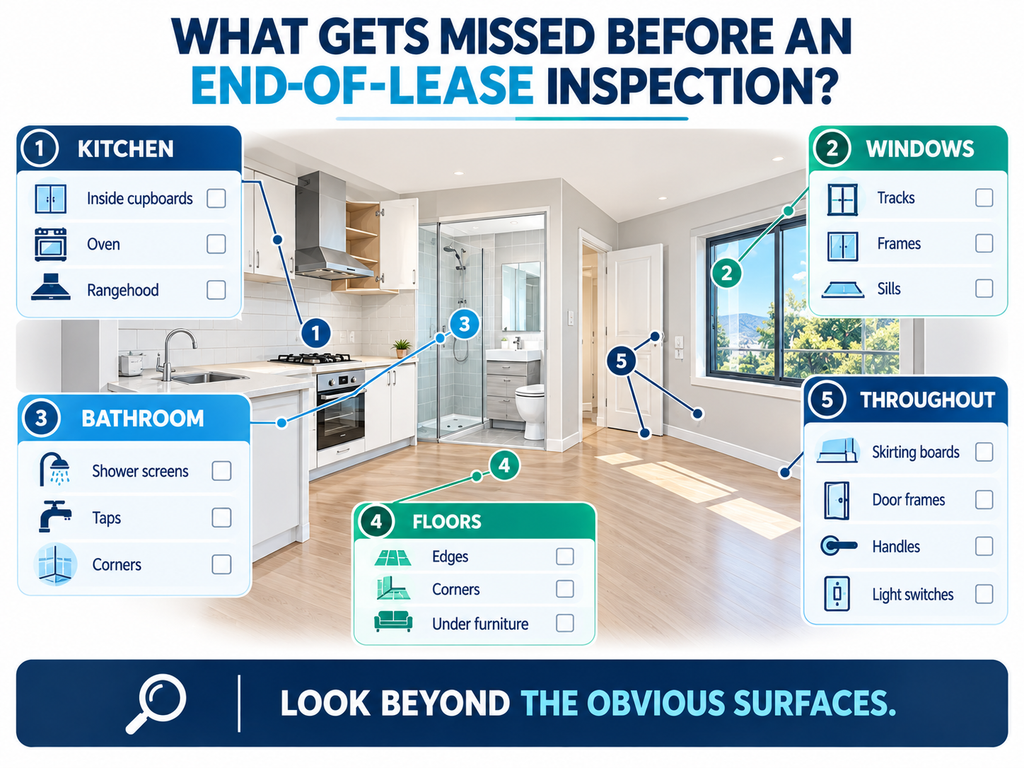
End of Lease Cleaning Hobart: What Gets Missed Most Often?
The areas most likely to be overlooked aren’t necessarily the largest areas of the property.
They are often the small, hidden or less frequently cleaned areas:
- Inside cupboards
- Oven and rangehood
- Window tracks
- Skirting boards
- Floor edges
- Door frames
- Handles
- Bathroom corners
- Built-in wardrobes
- Areas behind furniture
The best approach is to look beyond the obvious surfaces.
A property can appear clean at first glance while still having small areas that need attention before the final inspection.
Looking for Cleaning Services in Hobart?
If you’re moving out of a rental property and need professional cleaning, WestLife Australia provides cleaning services across Hobart and Tasmania.
Before arranging a service, discuss the property, its condition and the areas that need to be cleaned so the cleaning scope can be matched to your requirements.
Explore WestLife Australia Cleaning Services
You can also contact WestLife Australia to discuss your cleaning requirements and request a quote.
Frequently Asked Questions
What is included in end of lease cleaning in Hobart?
End of lease cleaning in Hobart can include detailed cleaning of kitchens, bathrooms, floors, surfaces, cupboards, doors and other areas of a rental property. The exact scope depends on the property and cleaning provider.
What areas are commonly missed during end of lease cleaning?
Commonly overlooked areas include window tracks, skirting boards, floor edges, cupboard interiors, oven areas, door frames, handles, bathroom corners and spaces previously hidden by furniture.
Is end of lease cleaning different from regular house cleaning?
Yes. Regular house cleaning is generally focused on maintaining an occupied property, while end of lease cleaning is carried out when a tenant is moving out and can require more detailed attention to areas throughout the property.
Do I need professional end of lease cleaning in Hobart?
Not necessarily. Whether you need professional cleaning depends on the property’s condition, the cleaning requirements and the time you have available before the final inspection.
When should I arrange end of lease cleaning in Hobart?
End of lease cleaning is generally arranged after personal belongings have been removed and before the final property inspection. The exact timing depends on your moving schedule and inspection date.