


Why Your Hobart Office Still Feels Dirty After Cleaning: 7 Areas Cleaners Often Miss
An office can look clean at first glance and still have areas where dust, dirt and everyday build-up accumulate.
Workstations, kitchens, carpets and shared spaces all experience regular use, but some areas are easier to overlook than others. Over time, these missed areas can affect how clean and professional your workplace feels.
For businesses looking for Office Cleaning Hobart, understanding these commonly overlooked areas can help you identify whether your current cleaning routine is actually covering everything your workplace needs.
Why Does an Office Still Feel Dirty After Cleaning?
Not every cleaning service follows the same level of detail.
A basic clean may focus on visible floors, bins, bathrooms and surfaces, while a more structured cleaning plan considers high-touch areas, hard-to-reach spaces, shared facilities and areas affected by heavy foot traffic.
The right cleaning frequency also depends on the workplace. An office in Hobart may have different requirements from a business in Kingston, Launceston, Devonport or Burnie, depending on its size, layout, staff numbers and daily activity.
Here are seven areas worth checking.
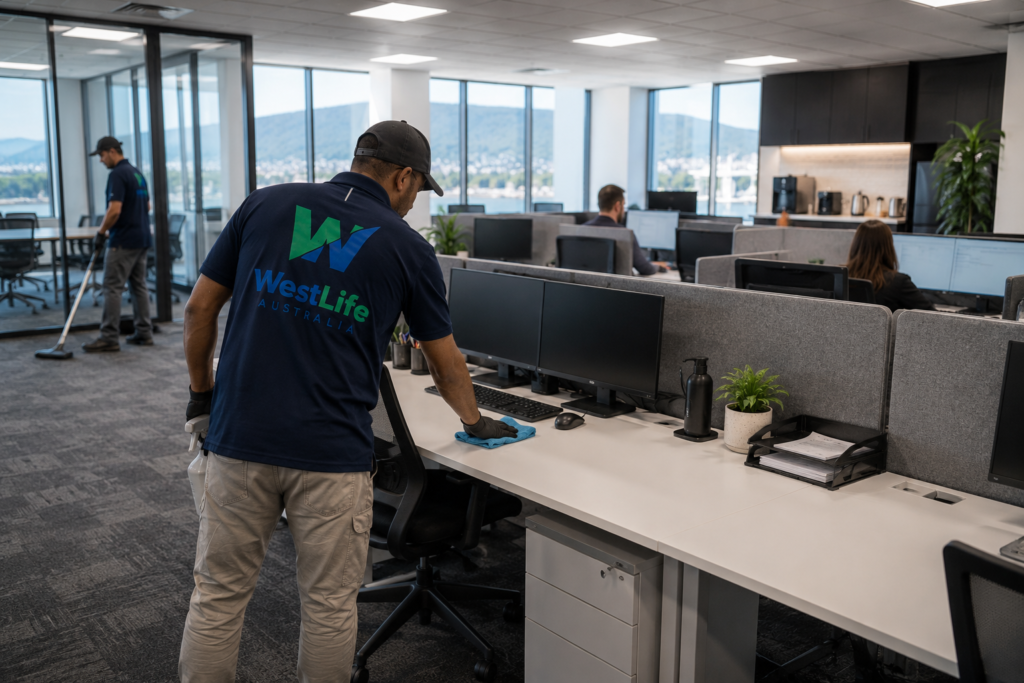
1. Under and Around Workstations
Workstations can collect dust in places that aren’t immediately visible.
Areas underneath desks, around chair bases, near cables and behind furniture can be difficult to reach during a quick cleaning routine.
Regular attention to these areas helps prevent dust and dirt from building up around employee workspaces.
For larger offices, a cleaning plan should clearly identify workstation areas rather than focusing only on the open floor.
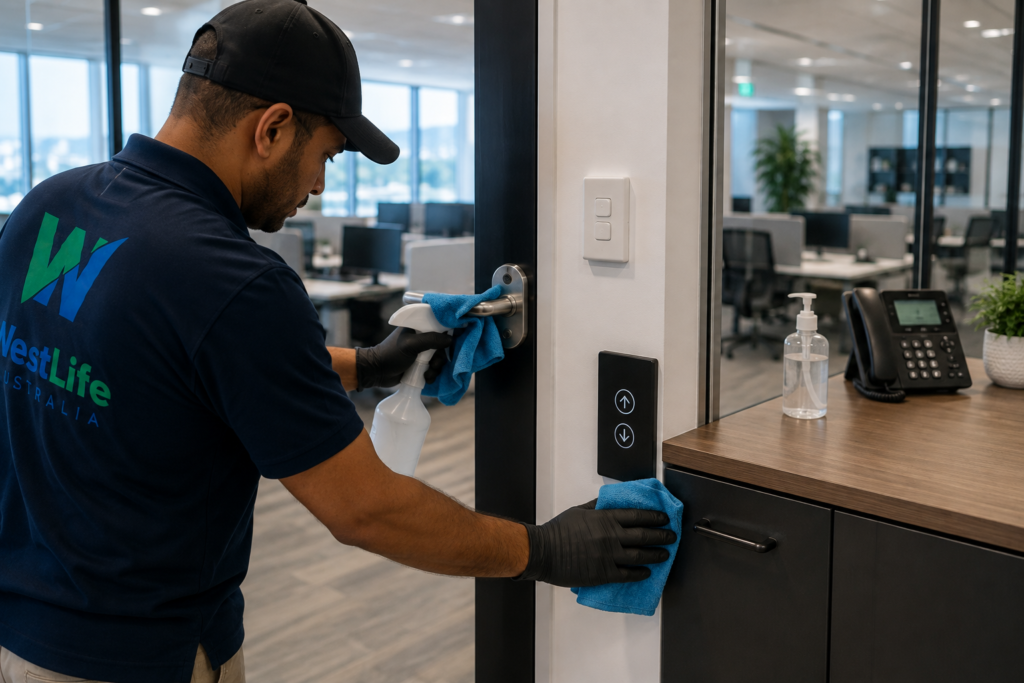
2. Door Handles, Light Switches and High-Touch Areas
Some of the most frequently used surfaces in an office are also among the easiest to overlook.
Think about:
- Door handles
- Light switches
- Cabinet handles
- Lift buttons
- Shared equipment
- Reception counters
These surfaces are touched throughout the working day, so they should form part of a regular cleaning routine.
A professional office cleaning plan should identify the high-touch areas specific to each workplace rather than relying on a one-size-fits-all checklist.
3. Office Kitchens and Break Rooms
The office kitchen can quickly show signs of heavy use.
Benchtops may be cleaned regularly, but other areas can easily be forgotten, including:
- Microwave handles
- Refrigerator handles
- Cupboard handles
- Sinks and taps
- Coffee stations
- Areas around bins
- Floors around food preparation areas
Because employees share these spaces throughout the day, kitchens and break rooms deserve consistent attention as part of an office cleaning schedule.
4. Meeting Rooms and Shared Spaces
Meeting rooms often experience high levels of shared use.
Tables, chairs, door handles, screens, remotes and other shared surfaces can all require regular cleaning.
A meeting room might look tidy after chairs are arranged and the table is wiped, but detailed cleaning should also consider the surrounding surfaces and floor area.
This becomes particularly important for businesses with multiple teams using the same rooms throughout the day.
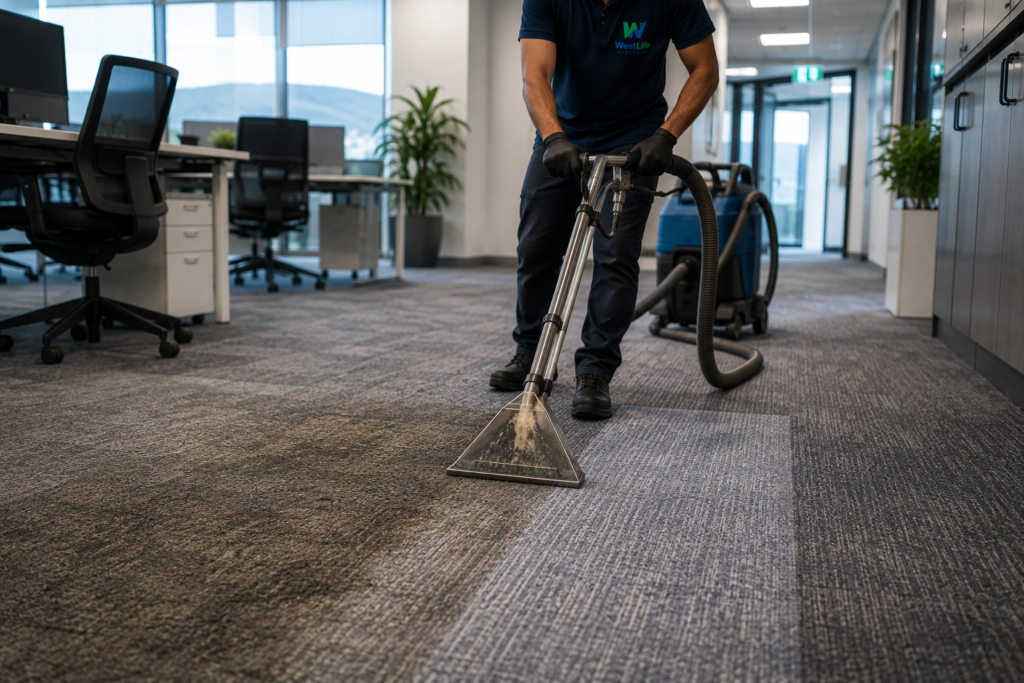
5. Carpet Edges and High-Traffic Areas
Office carpets can tell you a lot about how your workplace is being cleaned.
Entrance areas, corridors and frequently used walkways often experience significantly more foot traffic than other parts of the office. Dirt can gradually become visible around carpet edges and high-traffic paths.
Regular vacuuming is important, but carpets may also require professional deep cleaning depending on their condition and level of use.
For businesses across Hobart and surrounding areas, combining regular office cleaning with periodic carpet maintenance can help keep workplace flooring looking presentable.
6. Glass Partitions and Reception Areas
Your reception area is often one of the first parts of your workplace visitors see.
Fingerprints and smudges can quickly appear on:
- Glass doors
- Glass partitions
- Reception counters
- Waiting-area surfaces
Even when the rest of an office is clean, marked glass can make the workplace appear less maintained.
Regular glass and surface cleaning can help create a cleaner first impression for employees, customers and visitors.
7. Corners, Bins and Other Easy-to-Overlook Areas
Some areas simply don’t attract attention during a quick clean.
These can include:
- Behind bins
- Corners
- Skirting boards
- Under furniture
- Storage areas
- Areas around waste collection points
These spaces don’t necessarily need the same cleaning frequency as high-use areas, but they shouldn’t disappear from the overall cleaning plan.
Periodic detailed cleaning can help prevent these areas from being forgotten.
Does Every Office Need the Same Cleaning Schedule?
No.
A small office with a few employees may have very different cleaning requirements from a large workplace with dozens of staff, shared facilities and regular visitors.
When planning Office Cleaning Hobart services, businesses should consider:
- Number of employees
- Daily foot traffic
- Office size
- Type of business
- Shared facilities
- Operating hours
- Flooring types
- Customer or visitor traffic
The same principle applies across Tasmania. A workplace in Kingston may have different requirements from an office in Launceston, Devonport or Burnie.
The goal isn’t simply to clean more often. It’s to create a cleaning schedule that matches how the workplace is actually used.
How to Tell If Your Office Cleaning Plan Isn’t Working
Your current cleaning routine may need reviewing if you regularly notice:
- Dust returning quickly to the same areas
- Visible carpet traffic paths
- Untidy or poorly maintained kitchen areas
- Fingerprints on glass partitions
- Frequently touched surfaces being overlooked
- Areas that consistently require additional cleaning
- Staff complaints about workplace cleanliness
- Cleaning tasks that aren’t clearly defined
These signs don’t necessarily mean your cleaning company isn’t doing its job. They may indicate that the existing cleaning plan needs to be adjusted to better match your workplace.
What Should a Professional Office Cleaning Plan Include?
A good cleaning plan should consider both routine cleaning and periodic maintenance.
Daily or Regular Cleaning
Depending on the workplace, this may include:
- High-touch surfaces
- Bathrooms
- Kitchen and break rooms
- Waste removal
- Floors
- Common areas
Weekly or Scheduled Cleaning
This may include:
- Detailed workstation areas
- Glass partitions
- Additional floor care
- Less frequently used spaces
- Detailed surface cleaning
Periodic Cleaning
Depending on the condition of the workplace, businesses may also require:
- Carpet steam cleaning
- Deep cleaning
- Detailed floor maintenance
- Professional window cleaning
The exact schedule should be based on the property’s needs rather than following the same routine for every business.
When Should You Consider Changing Your Cleaning Service?
Sometimes the issue isn’t simply the cleaning frequency. It may be that the cleaning plan doesn’t match the way your business operates.
It may be worth reviewing your current arrangement if you regularly experience:
- Inconsistent cleaning results
- Repeatedly missed areas
- Limited flexibility around business hours
- Poor communication
- No customised cleaning schedule
- Changes in your workplace that aren’t reflected in the cleaning plan
A professional cleaning provider should be able to understand your workplace, identify its priorities and create a practical cleaning schedule around your operations.
Clean Doesn’t Always Mean Fully Clean
An office can look tidy while important areas are still being overlooked.
Workstations, kitchens, high-touch surfaces, carpets, glass partitions and less visible areas all contribute to how clean a workplace feels.
For businesses seeking Office Cleaning Hobart, the best approach isn’t simply finding someone to vacuum the floors and empty the bins. It’s creating a cleaning plan based on the workplace, its traffic, its facilities and the way employees and visitors use the space.
Whether your business operates in Hobart, Kingston, Launceston, Devonport or Burnie, reviewing these often-overlooked areas can be a useful first step toward a more effective workplace cleaning routine.
Need a More Reliable Office Cleaning Plan?
If your current cleaning routine isn’t keeping up with your workplace, Westlife Australia can help create a cleaning plan tailored to your business, premises and schedule.
From regular office cleaning to carpet, window and detailed workplace cleaning, our team provides professional cleaning solutions across Hobart, Kingston, Launceston, Devonport and Burnie.
Contact Westlife Australia today to discuss your office cleaning requirements and request a tailored quote.