


Spring Office Cleaning Hobart: A Practical 10-Point Checklist
Spring is a good time to take a closer look at your workplace.
After the colder months, offices can accumulate dust, marks, dirt around entrances, carpet traffic, fingerprints on glass and build-up in areas that aren’t always part of a routine cleaning schedule.
For businesses looking for office cleaning Hobart, spring can also be a useful opportunity to review whether the current cleaning routine still matches the way the workplace is being used.
You don’t necessarily need to change everything.
Instead, a practical spring cleaning review can help identify the areas that need extra attention, the tasks that may need to be scheduled more regularly and the parts of the workplace that are easy to overlook.
Here is a simple 10-point checklist to help you assess your office.
Why Should You Spring Clean Your Hobart Office?
Spring is the beginning of a new season in Tasmania, but September weather can still be unpredictable, with cold, wet and windy conditions possible, according to Discover Tasmania.
That makes it a useful time to look beyond everyday cleaning and assess the overall condition of your workplace.
A regular cleaning routine may already cover:
- Floors
- Bathrooms
- Bins
- Kitchen areas
- Workstations
- Common areas
However, some areas may only receive detailed attention occasionally.
Spring cleaning can be an opportunity to review:
- Carpet condition
- Glass and windows
- Floor edges
- High-touch surfaces
- Reception areas
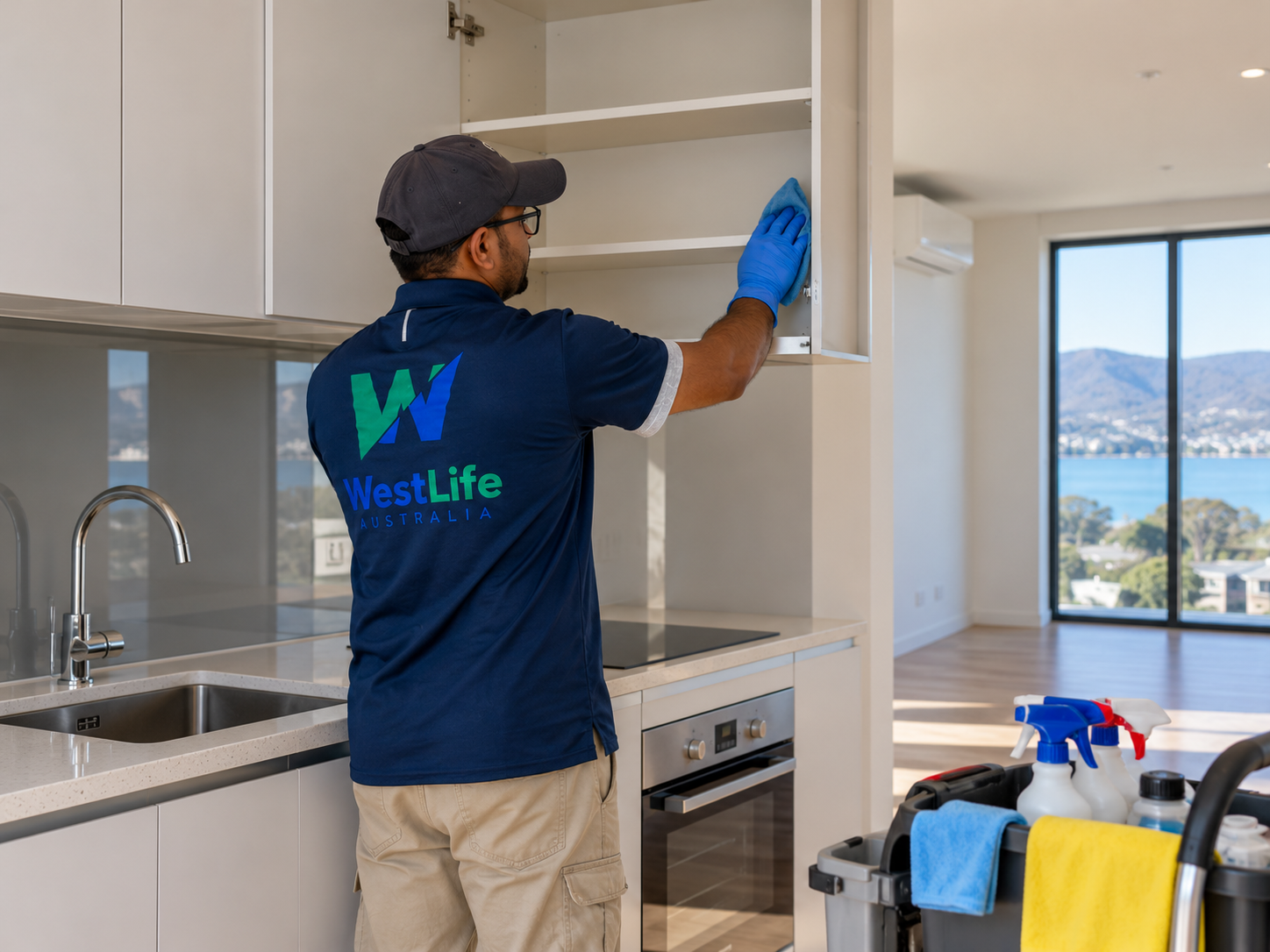
- Kitchen cupboards and appliances
- Hard-to-reach areas
- Storage spaces
- Less frequently used rooms
- Areas affected by increased foot traffic
A good spring cleaning plan should not simply mean cleaning everything more often.
It should focus on identifying what your workplace actually needs.
1. Start With Your Reception and Entrance
Your entrance is usually one of the first areas employees, customers and visitors see.
Take a close look at:
- Entry doors
- Door handles
- Reception counters
- Glass doors
- Entrance mats
- Floors
- Corners
- Skirting boards
- Waiting areas
Look for fingerprints, marks, dust and dirt around entrance points.
During wet or changeable weather, entrance areas can also experience additional moisture and tracked-in dirt.
Ask yourself:
Does your reception area still create the right first impression?
A clean entrance doesn’t necessarily require a deep clean every day, but it should be included in a regular cleaning plan.
2. Give Workstations a More Detailed Clean
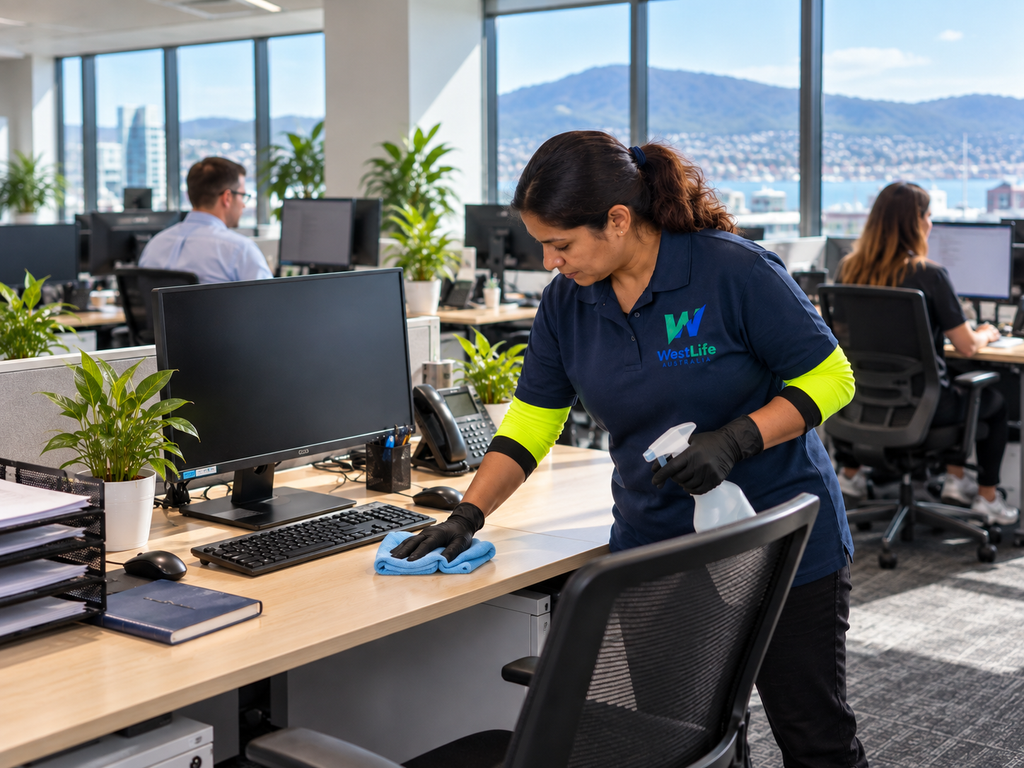
Everyday workstation cleaning can focus on visible surfaces, but spring is a good opportunity to look beyond the desktop.
Check:
- Desk surfaces
- Areas around monitors
- Keyboard areas
- Chair bases
- Under desks
- Cable areas
- Nearby shelving
- Floor areas around workstations
Dust can collect around equipment, furniture and areas that aren’t immediately visible.
Employees may also have personal items on their desks, making some areas difficult to access during routine cleaning.
A detailed office cleaning Hobart program should identify which workstation areas require regular attention and which can be included in periodic cleaning.
3. Check Your Office Carpets
Carpets can show gradual signs of heavy use that aren’t always obvious during everyday cleaning.
Look for:
- Darker traffic paths
- Marks near entrances
- Dirt around carpet edges
- Staining
- Flattened areas
- Dust around furniture
- Changes in carpet appearance
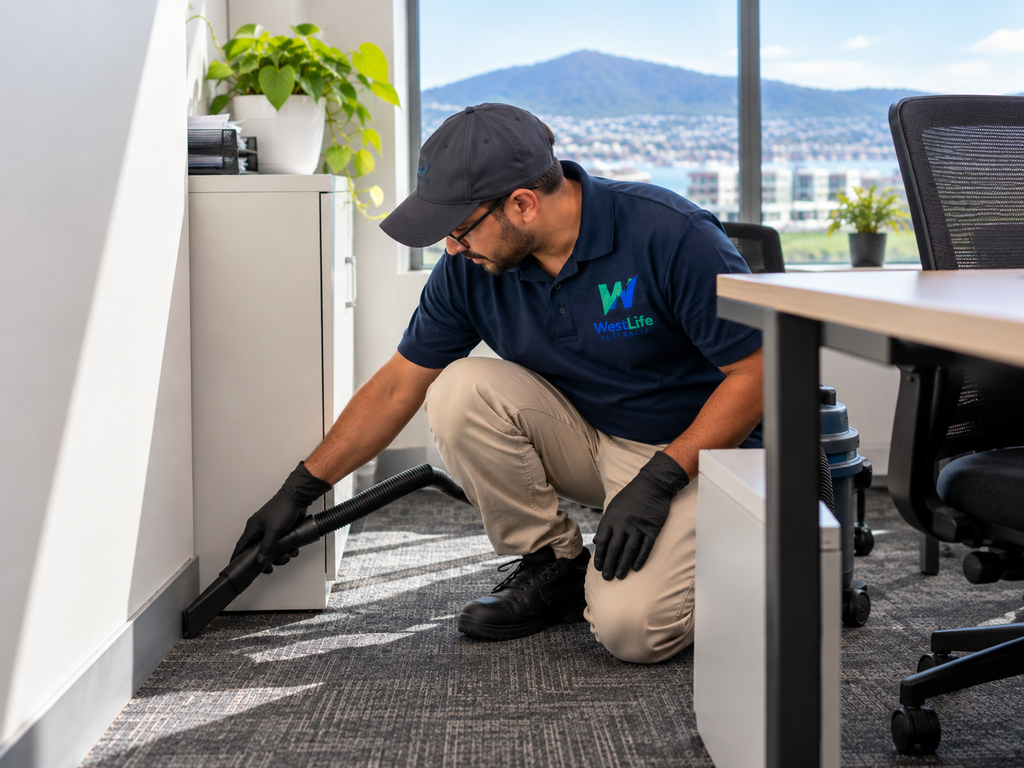
Regular vacuuming is important, but it isn’t the same as professional carpet maintenance.
Depending on the workplace, spring may be a suitable time to consider:
- Detailed carpet cleaning
- Professional steam cleaning
- Spot treatment
- Edge cleaning
- Additional maintenance in high-traffic areas
The right frequency depends on the amount of foot traffic, carpet type and condition of the workplace.
4. Clean Glass, Windows and Frames
Glass can quickly affect how clean an office appears.
Check:
- Internal glass partitions
- Glass doors
- Window surfaces
- Window frames
- Window sills
- Reception glass
- Meeting-room glass
Fingerprints and marks may be easy to notice in natural daylight, particularly when sunlight enters through windows.
Cleaning the glass itself is only part of the job.
Frames, edges and surrounding surfaces can also collect dust and residue.
For businesses reviewing their spring cleaning requirements, professional commercial window cleaning can be included where the property requires more detailed attention.
5. Review the Office Kitchen and Break Room
Shared kitchens experience repeated daily use.
Spring cleaning is a good opportunity to look beyond the main benchtop.
Check:
- Kitchen benches
- Sinks
- Taps
- Microwave handles
- Refrigerator handles
- Cupboard doors
- Coffee machine areas
- Splashbacks
- Floors
- Bin areas
Also check areas that may not receive attention during every regular clean.
For example, cupboard fronts may be wiped regularly while the tops of cabinets, appliance sides or areas around waste bins receive less attention.
A practical cleaning plan should separate regular kitchen cleaning from tasks that can be scheduled periodically.
6. Review Bathrooms and High-Touch Areas
Bathrooms are one of the most important shared areas in any workplace.
Check:
- Basins
- Taps
- Mirrors
- Toilets
- Floors
- Door handles
- Hand-drying areas
- Frequently touched surfaces
Then look throughout the rest of the workplace for high-touch areas such as:
- Light switches
- Door handles
- Handrails
- Shared equipment
- Reception surfaces
- Common-area furniture
These surfaces are touched repeatedly throughout the working day and should have a clearly defined place in the cleaning schedule.
7. Look Under, Behind and Around Furniture
This is one of the easiest parts of an office to overlook.
Instead of looking only at eye level, check:
Under.
Behind.
Around.
Look at:
- Under desks
- Behind cabinets
- Around chair bases
- Behind bins
- Under tables
- Along skirting boards
- Around storage units
- Behind equipment
Dust and dirt can gradually accumulate in these areas because they are harder to reach during a quick clean.
A spring cleaning review is a useful opportunity to identify which overlooked areas should be added to periodic cleaning tasks.
8. Check Floor Edges, Corners and Skirting Boards
Open floor areas are usually easy to notice and clean.
Edges and corners are different.
Inspect:
- Floor edges
- Corners
- Skirting boards
- Door thresholds
- Areas around furniture
- Areas around bins
- Corners of meeting rooms
- Less frequently used areas
These details can make a noticeable difference to the overall presentation of a workplace.
If the main floor looks clean but dust is visible along the edges, the issue may not be cleaning frequency alone.
The cleaning checklist may simply need to include more detailed edge and corner work.
9. Review Windows, Air Vents and Hard-to-Reach Areas
Spring cleaning shouldn’t stop at the areas employees use every day.
Depending on the property, consider reviewing:
- Air vents
- High ledges
- Window frames
- Light fittings
- High shelving
- Behind equipment
- Storage areas
- Hard-to-reach surfaces
Some of these areas may not require weekly cleaning.
However, they shouldn’t disappear from the cleaning plan completely.
A professional cleaning program can separate tasks into:
Regular Cleaning
Tasks completed daily, several times per week or according to the workplace schedule.
Periodic Cleaning
Tasks completed weekly, monthly or at another suitable interval.
Detailed or Deep Cleaning
Additional work scheduled according to the condition and requirements of the property.
This approach allows businesses to maintain consistent standards without treating every cleaning task as a daily requirement.
10. Review Your Overall Cleaning Schedule
The final step is to look at the cleaning plan itself.
Ask:
- Has the number of employees changed?
- Has foot traffic increased?
- Has the office layout changed?
- Are there more shared facilities?
- Are customers visiting more frequently?
- Has the business moved into additional space?
- Are some areas repeatedly being missed?
- Are carpets showing more traffic?
- Are bathrooms or kitchens requiring additional attention?
- Does the current cleaning frequency still make sense?
A cleaning schedule that worked for a small office may not be suitable after the business grows.
Likewise, a workplace with relatively low traffic may not need the same frequency as a busy commercial facility.
The goal should be to create a cleaning program around the actual workplace.
What Should a Spring Office Cleaning Checklist Include?
A practical spring cleaning review can be divided into several categories.
Everyday Cleaning
Depending on the workplace, this may include:
- Workstations
- Floors
- Bathrooms
- Kitchen areas
- Waste removal
- High-touch surfaces
- Common areas
Detailed Cleaning
This may include:
- Floor edges
- Skirting boards
- Glass partitions
- Door frames
- Less-accessible surfaces
- Areas behind furniture
- Detailed kitchen cleaning
Periodic Maintenance
Depending on the property’s condition:
- Carpet steam cleaning
- Professional window cleaning
- Deep cleaning
- Detailed floor maintenance
- Additional hard-to-reach area cleaning
This structure helps businesses avoid treating every cleaning task as though it needs to happen at the same frequency.
Should You Do Spring Cleaning Yourself or Use a Professional Cleaner?
Some businesses can manage basic spring cleaning tasks internally.
For example, employees may be able to:
- Declutter desks
- Organise storage
- Remove unwanted items
- Clear personal belongings
- Identify areas that need attention
However, detailed commercial cleaning can require more time, equipment and planning.
Professional cleaning may be useful when the workplace requires:
- Larger-scale carpet cleaning
- Detailed glass cleaning
- Deep cleaning
- Regular commercial cleaning
- Hard-to-reach area cleaning
- Floor maintenance
- A structured cleaning schedule
The decision doesn’t have to be all or nothing.
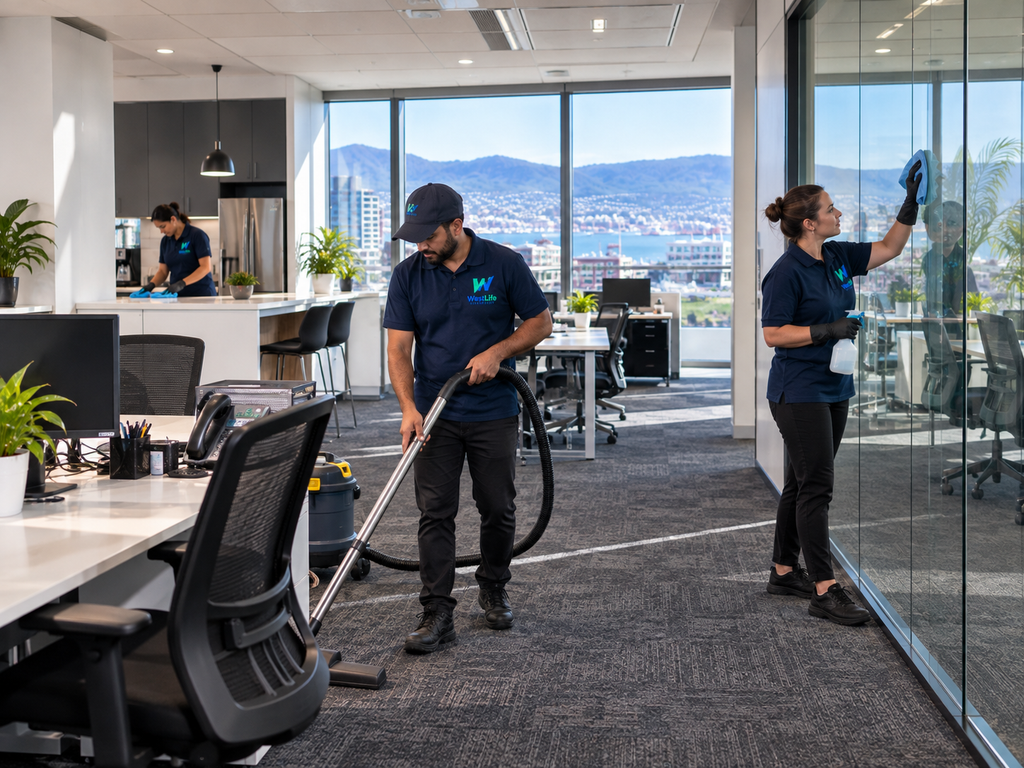
Businesses can combine internal workplace organisation with professional cleaning services for tasks that require additional time or equipment.
How Often Should a Hobart Office Be Deep Cleaned?
There isn’t one schedule that suits every workplace.
The appropriate frequency can depend on:
- Office size
- Number of employees
- Daily foot traffic
- Type of business
- Flooring
- Shared facilities
- Customer traffic
- Operating hours
- Seasonal conditions
- Existing cleaning routine
A busy customer-facing office may need more frequent detailed cleaning than a small workplace with limited visitors.
The same principle applies across Tasmania.
An office in Hobart may have different requirements from a workplace in Kingston, Launceston, Devonport or Burnie.
Rather than automatically choosing a fixed cleaning frequency, businesses should review how their workplace is actually being used.
Signs Your Office Needs More Than a Routine Clean
Your spring cleaning review may reveal that your current cleaning arrangement needs some attention.
Look for:
- Dust returning quickly
- Visible carpet traffic paths
- Fingerprints on glass
- Dirt around floor edges
- Kitchen areas requiring repeated cleaning
- Dust behind furniture
- Marks on doors and handles
- Frequently touched surfaces being overlooked
- Areas that repeatedly need additional attention
- Staff regularly raising cleanliness concerns
These signs don’t necessarily mean your cleaning provider is doing a poor job.
They may indicate that the cleaning scope, frequency or checklist needs to be adjusted.
A good commercial cleaning program should change when the workplace changes.
How to Build a Better Spring Cleaning Plan
Start by walking through the workplace.
Step 1 — Identify the areas
List the areas that need regular, periodic or detailed cleaning.
Step 2 — Consider usage
Identify areas with heavy foot traffic, frequent visitors or repeated daily use.
Step 3 — Review the current schedule
Compare what is currently being cleaned with what the workplace actually needs.
Step 4 — Identify additional tasks
Consider carpet cleaning, glass cleaning, detailed floor care or other periodic requirements.
Step 5 — Create a practical schedule
Separate everyday tasks from weekly, monthly and periodic cleaning requirements.
Step 6 — Review the results
After the schedule has been implemented, check whether the same problem areas continue to appear.
This creates a more practical approach than simply adding more cleaning hours without identifying what actually needs attention.
Spring Cleaning Across Hobart and Tasmania
Westlife Australia provides professional commercial cleaning services across Hobart and Tasmania, including Launceston, Burnie, Devonport and surrounding areas.
The exact cleaning requirements can vary between workplaces.
An office in central Hobart may have different foot traffic and access requirements from a business in Kingston.
A larger workplace in Launceston, Devonport or Burnie may also require a different cleaning schedule depending on its size, staff numbers and facilities.
The principle remains the same:
Assess the workplace → Identify priorities → Build the cleaning schedule → Deliver the service → Review the results
This helps businesses maintain a cleaning routine that reflects how their workplace actually operates.

Spring Cleaning Doesn’t Have to Mean Starting From Scratch
A spring cleaning review isn’t necessarily about replacing your existing cleaning routine.
It is about looking at your workplace with fresh eyes and identifying areas that may need additional attention.
From reception areas and workstations to carpets, glass, kitchens, bathrooms, floor edges and hard-to-reach spaces, small details can affect how clean and professional a workplace feels.
For businesses looking for office cleaning Hobart, spring is a useful time to review whether the current cleaning schedule still matches the way the workplace is being used.
Whether your business operates in Hobart, Kingston, Launceston, Devonport or Burnie, a tailored cleaning plan can help maintain a consistent standard throughout the year.
Is Your Hobart Office Ready for Spring?
If your workplace needs more than its usual cleaning routine, Westlife Australia can help create a cleaning plan tailored to your business, premises and schedule.
From regular office cleaning and commercial cleaning to carpet, window and detailed workplace cleaning, our team provides professional cleaning solutions across Hobart, Kingston, Launceston, Devonport and Burnie.
Contact Westlife Australia today to discuss your cleaning requirements and request a tailored quote.
FAQs — Spring Office Cleaning Hobart
1. What does office cleaning in Hobart include during a spring cleaning review?
Office cleaning in Hobart can include workstations, floors, bathrooms, kitchens, common areas and high-touch surfaces, while a spring review can also identify areas needing detailed or periodic cleaning.
2. How often should office cleaning in Hobart include detailed cleaning tasks?
The frequency depends on the office size, staff numbers, foot traffic, flooring, shared facilities and how the workplace is used. Tasks such as carpet cleaning, glass cleaning and hard-to-reach areas can be scheduled periodically rather than daily.
3. When should a Hobart office consider professional office cleaning services?
Professional office cleaning services can be useful when a workplace needs more than routine cleaning, such as carpet steam cleaning, detailed glass cleaning, floor maintenance, deep cleaning or cleaning of difficult-to-reach areas.
4. Can office cleaning in Hobart be adjusted when a business grows?
Yes. As employee numbers, foot traffic, office space or shared facilities change, the existing cleaning schedule may no longer be suitable. Office cleaning in Hobart should be reviewed and adjusted to reflect how the workplace is actually being used.
5. Does spring cleaning mean changing your entire office cleaning routine?
No. Spring cleaning can simply be a review of your existing office cleaning in Hobart to identify overlooked areas, adjust cleaning frequencies and add periodic tasks where needed, rather than starting the entire cleaning routine from scratch.