


How Often Should a Medical Centre Be Professionally Cleaned in Hobart?
A medical centre is different from a standard office.
Patients, healthcare workers, visitors and support staff may move through the same reception areas, consultation rooms, bathrooms and shared spaces throughout the day. This means the cleaning requirements of a medical facility need to be considered around its use, layout, patient traffic and specific cleaning procedures.
For practices looking for medical cleaning Hobart, one of the most important questions is often:
How often should a medical centre be professionally cleaned?
There isn’t one fixed schedule that suits every clinic.
A small allied health practice with limited daily traffic may have different requirements from a busy medical centre with multiple consultation rooms and a constant flow of patients.
The right approach is to assess the facility, identify high-use areas and create a cleaning schedule that reflects how the practice actually operates.
Why Does Medical Centre Cleaning Need a Different Approach?
A medical centre isn’t simply another commercial workplace.
Healthcare environments can include:
- Consultation rooms
- Treatment areas
- Reception desks
- Waiting rooms
- Bathrooms
- Staff areas
- Shared equipment
- High-touch surfaces
- Clinical and non-clinical spaces
Australian healthcare infection prevention guidance includes routine environmental cleaning as part of standard precautions, with cleaning schedules considering the use and function of the organisation and frequently touched surfaces, according to Victoria Department of Health.
This doesn’t mean every part of a medical centre needs to be cleaned at the same frequency.
Instead, cleaning should be prioritised according to:
- How often an area is used
- How many people use it
- The type of activity taking place
- Surface types
- Patient and staff traffic
- The requirements of the facility
- Whether additional or periodic cleaning is required
A structured healthcare cleaning program should therefore be built around the individual facility.
How Often Should a Medical Centre Be Cleaned?
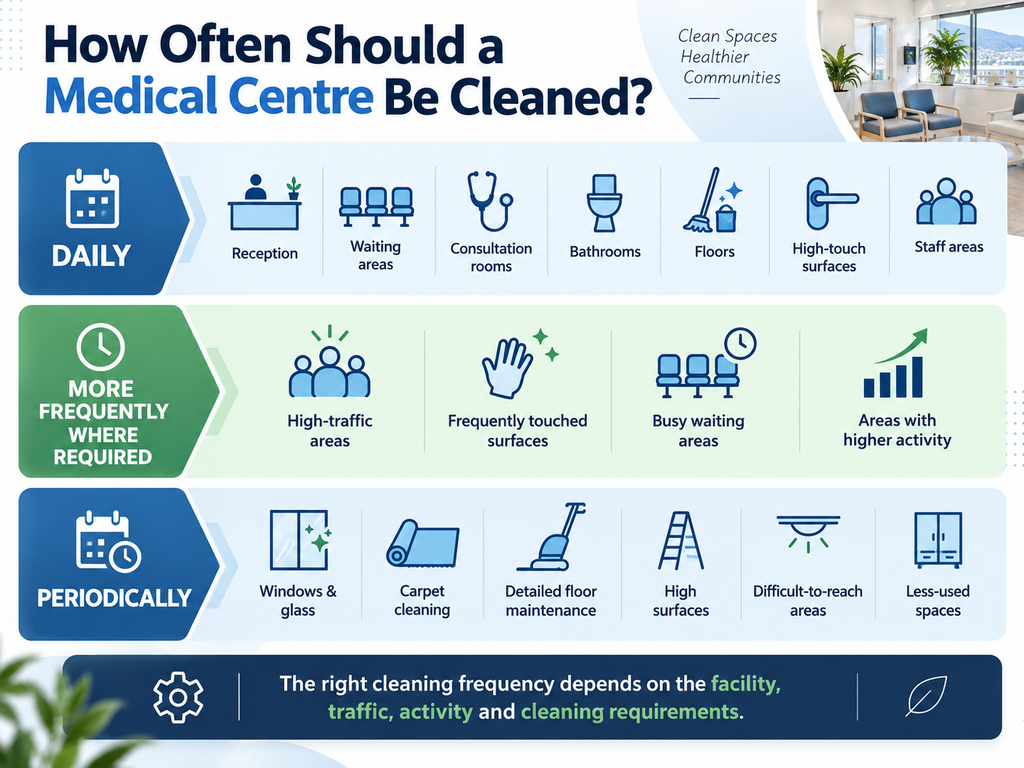
The exact frequency depends on the medical centre.
For example, a practice may require cleaning:
Daily
Routine cleaning of regularly used areas such as:
- Reception
- Waiting areas
- Consultation rooms
- Bathrooms
- Kitchen or staff areas
- Floors
- Frequently touched surfaces
- Waste areas
Several Times During the Day
Higher-use or frequently touched areas may require additional attention depending on the facility’s activity and cleaning procedures.
Australian guidance notes that routine cleaning schedules should consider building usage, organisational function and industry-specific requirements, with increased frequency potentially appropriate in higher-risk or high-traffic circumstances, according to Victoria Department of Health.
Periodically
Some areas may require less frequent but more detailed cleaning, including:
- Glass partitions
- Windows
- High or difficult-to-reach surfaces
- Detailed floor maintenance
- Carpet cleaning
- Storage areas
- Less frequently used rooms
The important point is that medical cleaning frequency should be based on the facility rather than a generic schedule.
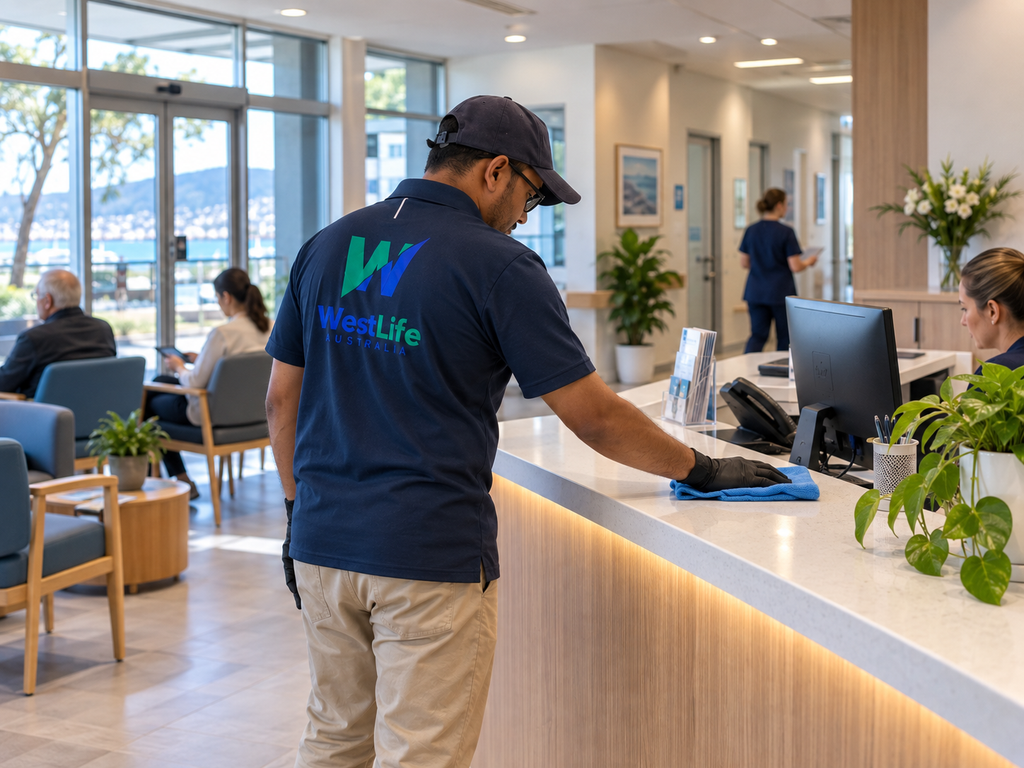
1. Reception and Waiting Areas
The reception area is often the first part of a medical centre patients see.
It can also experience continuous use throughout the day.
A cleaning checklist may include:
- Reception counters
- Waiting-room tables
- Chairs
- Door handles
- Glass doors
- Floors
- High-touch surfaces
- Shared items and equipment
- Waste bins
Reception areas can also contain surfaces that are frequently touched by patients, visitors and staff.
A professional medical cleaning Hobart service should therefore identify the specific high-use areas within the practice rather than treating every surface in the same way.
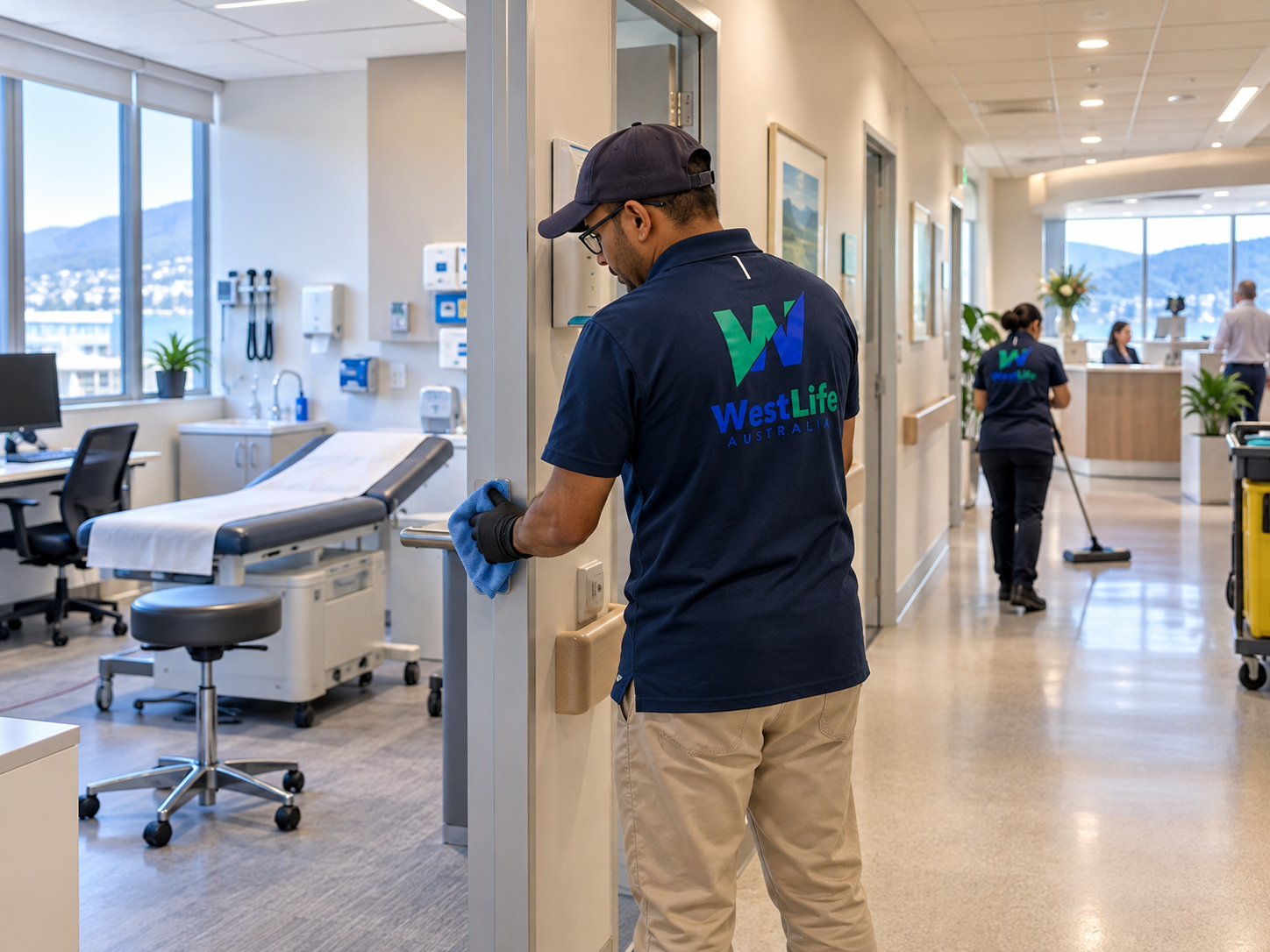
2. Consultation and Treatment Rooms
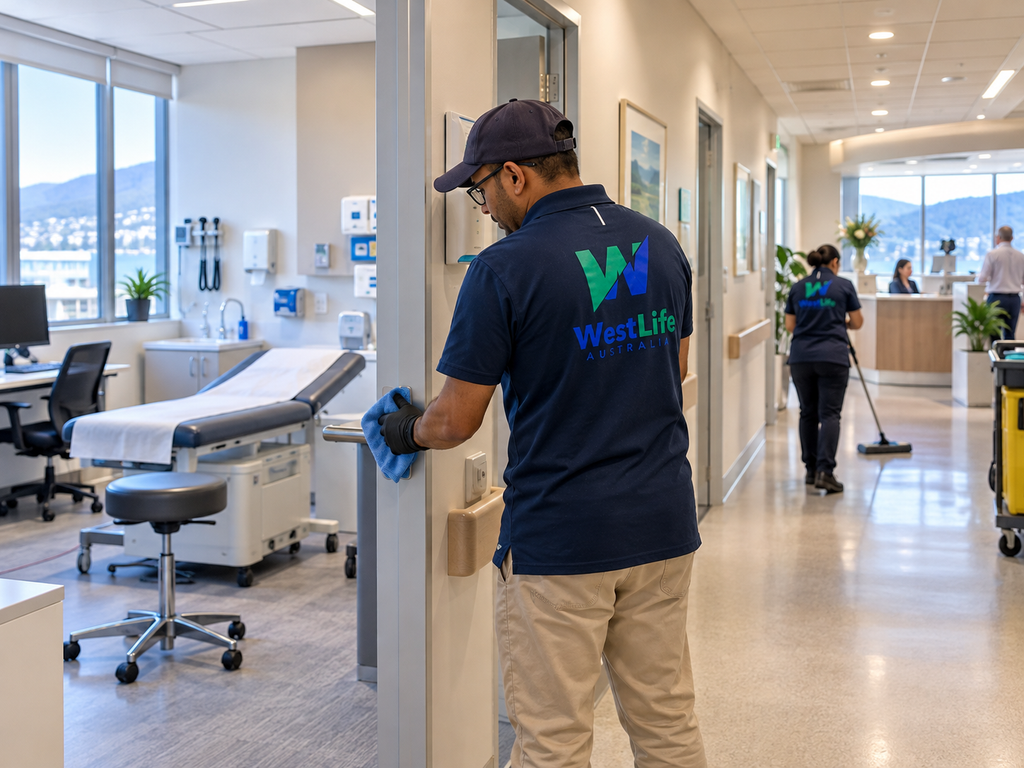
Consultation rooms are among the most important areas to include in a healthcare cleaning plan.
Depending on the type of practice, cleaning requirements may include:
- Examination tables
- Work surfaces
- Chairs
- Door handles
- Floors
- Sinks and taps
- Frequently touched equipment surfaces
- Other non-clinical surfaces
The cleaning approach should be appropriate for the room and the activities carried out there.
Healthcare guidance recommends appropriate routine environmental cleaning and attention to frequently touched surfaces in healthcare settings, according to Victoria Department of Health.
For a clinic, this means the cleaning plan should clearly identify consultation and treatment areas rather than relying on a general office-cleaning checklist.
3. High-Touch Surfaces
Some surfaces receive significantly more contact than others.
These may include:
- Door handles
- Light switches
- Reception counters
- Handrails
- Taps
- Chairs
- Shared equipment
- Touch screens
- Frequently used work surfaces
Australian healthcare guidance specifically identifies frequently touched surfaces as an important part of routine environmental cleaning, according to Victoria Department of Health.
The exact surfaces will vary from one facility to another.
For example, a dental practice may have different high-touch areas from a physiotherapy clinic or GP medical centre.
This is why a healthcare cleaning services Hobart plan should be customised to the facility.
4. Bathrooms and Hand-Washing Areas
Bathrooms and hand-washing areas require consistent attention in any medical facility.
A routine cleaning plan may include:
- Basins
- Taps
- Toilets
- Mirrors
- Floors
- Door handles
- Hand-drying areas
- Frequently touched surfaces
These areas can experience repeated use throughout the day.
Cleaning schedules should also clearly identify the products, processes and responsibilities associated with routine cleaning.
5. Floors and Entrance Areas
Floors can accumulate dirt, dust and tracked-in material as patients and staff move through the facility.
Pay particular attention to:
- Main entrances
- Reception areas
- Corridors
- Consultation-room floors
- High-traffic paths
- Areas around seating
- Floor edges
- Corners
Different flooring materials may also require different cleaning methods.
A medical centre cleaning Hobart plan should therefore consider the flooring throughout the property rather than applying one method everywhere.
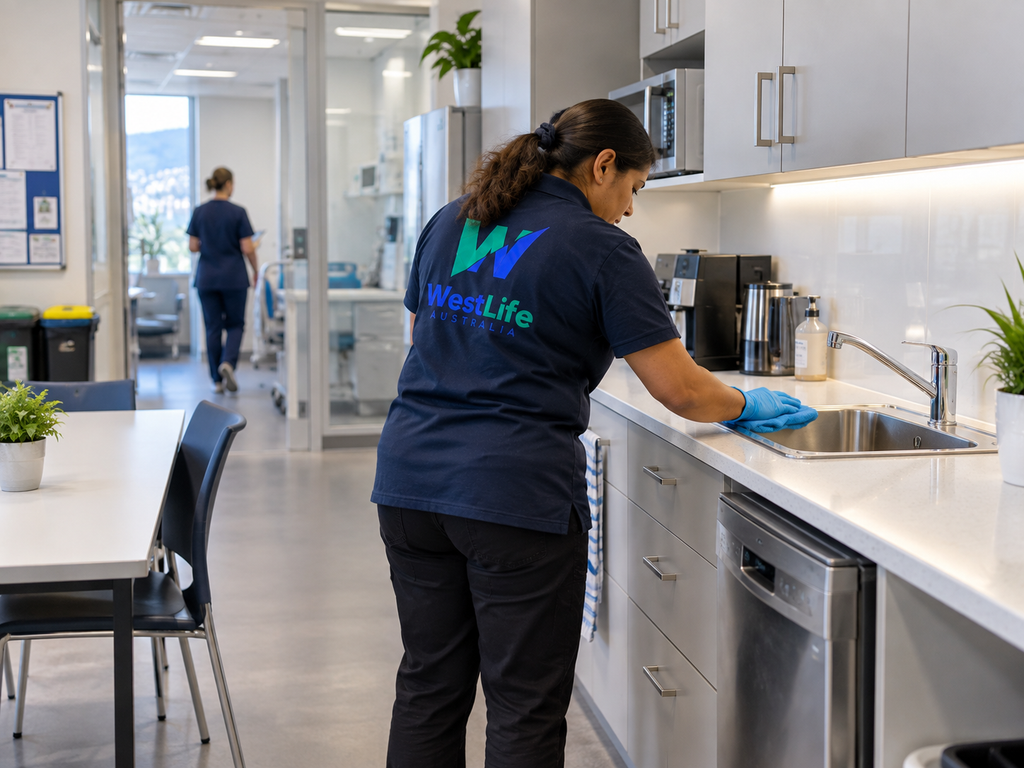
6. Staff Kitchens and Break Areas
Staff areas are sometimes overlooked because they aren’t patient-facing.
However, kitchens and break rooms can experience regular daily use.
Cleaning may include:
- Kitchen benches
- Sinks
- Taps
- Appliance handles
- Cupboards
- Tables
- Chairs
- Floors
- Waste areas
These areas can be included within the regular cleaning schedule while less frequently required tasks can be handled through periodic cleaning.
What Factors Determine Medical Centre Cleaning Frequency?
There isn’t a universal number of cleaning visits that applies to every medical practice.
Instead, several factors should be considered.
Number of Patients
A clinic with a high number of daily appointments may experience more traffic through reception, waiting areas, consultation rooms and bathrooms.
Number of Staff
More employees can mean greater use of shared spaces, kitchens, bathrooms and work areas.
Type of Healthcare Service
A GP practice, dental clinic, physiotherapy centre and specialist medical practice can all have different cleaning requirements.
Facility Size
A larger facility with multiple rooms and shared spaces may require more cleaning time and a more detailed schedule.
Operating Hours
A practice operating from early morning until evening may require cleaning outside normal patient hours.
High-Traffic Areas
Reception areas, corridors, bathrooms and other shared spaces may require more frequent attention than areas with limited use.
Facility Requirements
The cleaning plan should reflect the specific requirements, procedures and activities of the healthcare facility.
Should Medical Centres Be Cleaned After Hours?
After-hours cleaning can be useful for medical practices that want cleaning activities to take place with minimal disruption to patients and staff.
Depending on the facility, cleaning may be scheduled:
- Before opening
- After closing
- During quieter periods
- Between selected operating periods
The best schedule depends on the practice’s opening hours and operational requirements.
Westlife Australia’s healthcare cleaning service includes after-hours availability and cleaning programs designed around clinic hours.
For medical practices, scheduling should also account for access, staff requirements and the areas that need to be cleaned.
Routine Cleaning vs Periodic Medical Centre Cleaning
Not every cleaning task needs to happen every day.
A practical healthcare cleaning plan can separate tasks into different categories.
Routine Cleaning
Depending on the facility, this may include:
- Reception areas
- Consultation rooms
- Bathrooms
- Floors
- High-touch surfaces
- Staff areas
- Waste removal
Periodic Cleaning
This may include:
- Detailed glass cleaning
- Window cleaning
- Carpet cleaning
- Detailed floor maintenance
- High or difficult-to-reach areas
- Less frequently used spaces
Separating routine and periodic tasks can make the cleaning schedule easier to manage while ensuring less frequently used areas are not forgotten.
What About High-Touch Surfaces?
High-touch surfaces deserve particular attention because they are used repeatedly throughout the day.
Examples can include:
- Door handles
- Light switches
- Handrails
- Reception counters
- Taps
- Shared equipment
- Touch screens
- Chairs
- Frequently used work surfaces
The exact list should be based on the facility.
Australian healthcare guidance recommends that cleaning schedules identify the surfaces to be cleaned, the product used, the cleaning process and who is responsible for the task, according to Victoria Department of Health.
This is one reason a detailed cleaning checklist can be more useful than simply instructing a cleaner to “clean the clinic”.
How Can a Medical Centre Review Its Current Cleaning Schedule?
If you’re unsure whether your current medical centre cleaning Hobart arrangement is sufficient, start by reviewing the workplace.
Ask:
- Are reception areas consistently clean?
- Are consultation rooms included in the cleaning schedule?
- Are high-touch surfaces clearly identified?
- Are bathrooms receiving regular attention?
- Are floors maintained according to their condition and use?
- Are staff kitchens included?
- Are less frequently used areas being overlooked?
- Does the schedule account for your operating hours?
- Are cleaning tasks clearly documented?
- Has the cleaning plan changed as the practice has grown?
If the same areas repeatedly require additional cleaning, it may be time to review the cleaning scope or frequency.
What Should a Professional Healthcare Cleaning Plan Include?
A professional healthcare cleaning plan should be based on the facility rather than copied from a generic commercial cleaning checklist.
It should identify:
Areas to Be Cleaned
For example:
- Reception
- Waiting areas
- Consultation rooms
- Bathrooms
- Staff areas
- Corridors
- Treatment areas
- Shared spaces
Cleaning Frequency
Clearly identify which tasks are:
- Daily
- More frequent where required
- Weekly
- Periodic
Cleaning Procedures
The plan should identify the appropriate cleaning process and products for the surfaces and areas involved.
Responsibilities
A clear checklist can help identify which tasks need to be completed and reviewed.
Quality Checks
Regular reviews can help identify missed areas and determine whether the cleaning program needs adjustment.
Westlife Australia’s existing healthcare service highlights trained cleaners, infection-control and cross-contamination training, police-checked and uniformed staff, medical-grade cleaning products, after-hours availability and cleaning audits.
When Should a Medical Centre Review Its Cleaning Service?
Your current arrangement may need reviewing if:
- The practice has expanded
- Patient numbers have increased
- New rooms have been added
- Operating hours have changed
- Cleaning tasks are regularly missed
- High-touch areas require more frequent attention
- Staff are regularly raising cleanliness concerns
- The current cleaning schedule no longer matches the facility
- Specialist cleaning requirements have changed
A cleaning plan shouldn’t remain unchanged simply because it was suitable when the practice first opened.
As the workplace changes, the cleaning requirements can change too.
Medical Cleaning in Hobart Should Be Built Around the Practice
There is no single cleaning schedule that works for every medical centre.
A small allied health clinic may have very different requirements from a busy GP practice, dental clinic or specialist medical centre.
The cleaning plan should consider:
The facility → Patient traffic → Staff activity → High-touch areas → Operating hours → Cleaning requirements
For practices in Hobart, this means looking at the actual way the clinic operates before deciding how often each area needs attention.
The same principle can apply to healthcare facilities in Kingston, Launceston, Devonport and Burnie.
How Often Should a Medical Centre Be Professionally Cleaned?
The answer depends on the facility.
For many practices, routine cleaning should be scheduled regularly, with higher-use areas receiving attention according to their level of activity and the facility’s requirements.
Other areas can be handled through weekly, monthly or periodic cleaning schedules.
The important thing is not simply choosing the highest possible cleaning frequency.
It’s creating a medical cleaning schedule that matches the practice.
That means assessing:
- Patient numbers
- Staff numbers
- Facility size
- Type of healthcare service
- Operating hours
- High-touch surfaces
- Shared facilities
- Flooring
- Cleaning requirements

A Clean Medical Centre Requires More Than a Basic Cleaning Routine
A medical centre can look clean at first glance while still having areas that require more detailed attention.
Reception counters, consultation rooms, bathrooms, floors, staff areas and frequently touched surfaces all form part of the overall cleaning environment.
For businesses searching for medical cleaning Hobart, the most useful approach is to create a cleaning plan based on the facility, its activity and its operational requirements.
Whether your practice operates in Hobart, Kingston, Launceston, Devonport or Burnie, the right cleaning schedule should reflect the way your healthcare facility is actually used.
Does Your Medical Centre Need a More Structured Cleaning Plan?
If your current cleaning routine isn’t keeping up with your practice, Westlife Australia can help create a healthcare cleaning plan tailored to your facility, operating hours and cleaning requirements.
We provide professional healthcare cleaning services for medical centres, GP clinics, specialist rooms, allied health and dental practices, with cleaning programs designed around the needs of each facility.
Contact Westlife Australia today to discuss your medical cleaning requirements and request a tailored quote.
FAQs — How Often Should a Medical Centre Be Professionally Cleaned in Hobart?
1. How often should medical cleaning in Hobart be carried out?
Medical cleaning in Hobart should be scheduled according to the facility’s size, patient traffic, staff numbers, type of healthcare service, operating hours and specific cleaning requirements. Regular cleaning can be combined with more frequent or periodic cleaning where needed.
2. What areas should medical cleaning in Hobart cover?
Medical cleaning in Hobart can cover reception and waiting areas, consultation rooms, bathrooms, floors, staff kitchens, treatment areas, shared spaces and frequently touched surfaces. The exact scope should be tailored to how the medical centre operates.
3. Do medical centres need professional medical cleaning in Hobart after hours?
After-hours medical cleaning in Hobart can be useful when a practice wants cleaning completed with minimal disruption to patients and staff. Depending on the facility, cleaning can be scheduled before opening, after closing or during quieter operating periods.
4. How does patient traffic affect medical cleaning in Hobart?
Higher patient traffic can increase the use of reception areas, waiting rooms, consultation rooms, bathrooms and other shared spaces. Medical cleaning in Hobart should therefore consider how frequently different areas are used when determining the appropriate cleaning schedule.
5. When should a medical centre review its medical cleaning in Hobart schedule?
A medical centre should consider reviewing its medical cleaning in Hobart schedule when patient numbers increase, new rooms are added, operating hours change, cleaning tasks are repeatedly missed or the existing schedule no longer matches the facility’s needs.